
Calisthenics Coach Training Space in Carmel
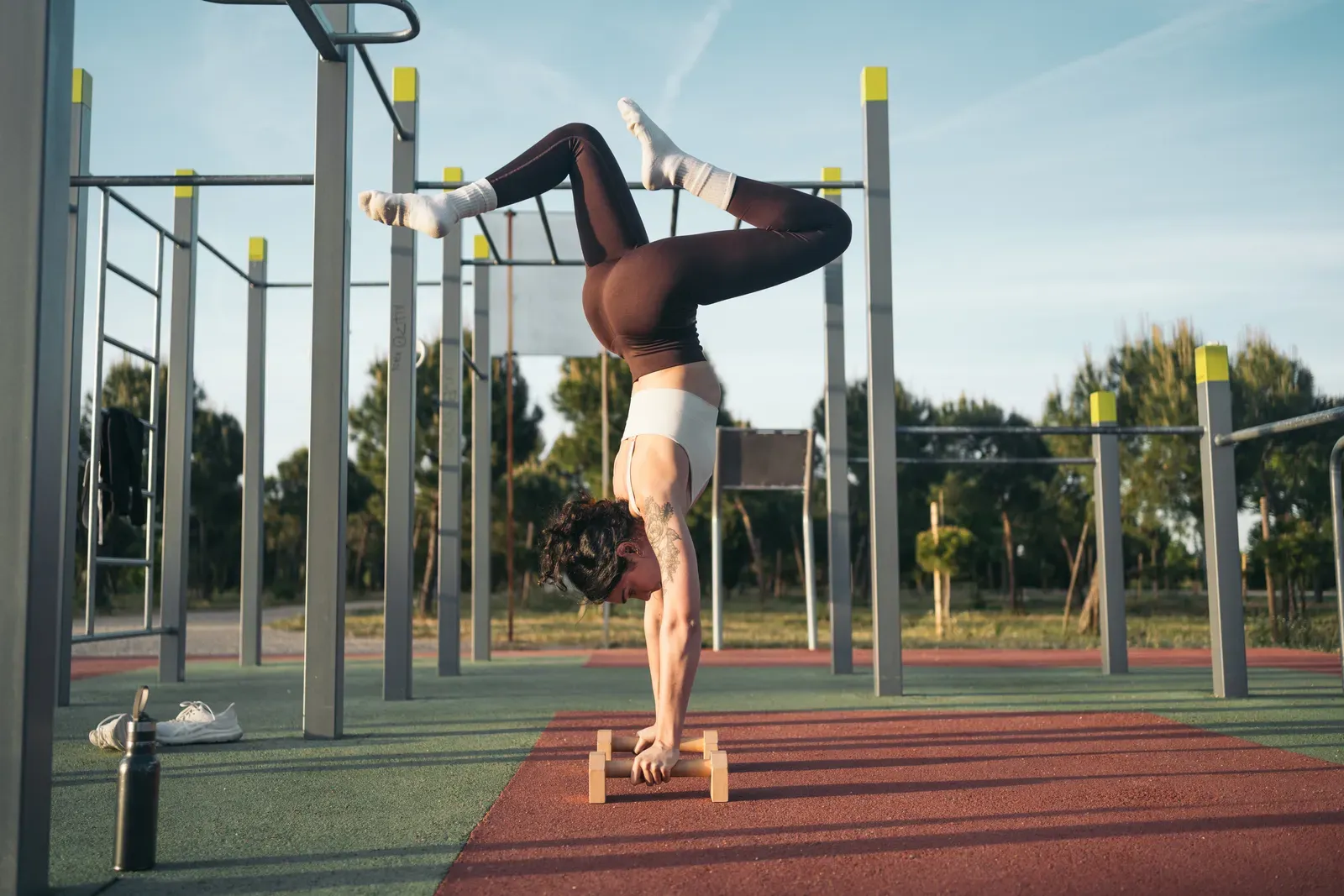
Calisthenics coaching is patient, floor-based skill teaching, and it needs a quiet room far more than it needs apparatus. FlexWerk at Carmel City Center rents private training spaces by the hour, giving a calisthenics coach a controlled room for strict pulling, pressing, and progression work, with no lease and the first hour free. The honest equipment note comes first: there are no rings here and nothing to rig overhead, so program around the rack, the cables, the floor, and the portable tools you bring.
What bodyweight skill coaching actually needs
Strip the discipline to its coaching requirements and the list is short: clear floor, something to pull on, something to press from, and unbroken attention. The skills your clients want, clean push-up mechanics through to advanced pressing progressions, strict pulling strength, core tension, and straight-arm work, are built in sets of five slow, humbling reps with a coach watching every one. A FlexSpace Standard at 150 sq ft for 1 to 2 guests covers it: the custom lifting rack anchors pulling and supported-position work, the cable system loads progressions and accessories precisely, dumbbells handle weighted strength behind the skills, and your parallettes and bands come in with your session bag.
What does not fit, say plainly: ring work, anything requiring overhead hanging setups, and swinging skills. Coaches whose curriculum leans on those keep them at an outdoor bar park in summer and treat the private room as the strength and technique engine underneath.
Testing turns the discipline’s romance into a coaching product. Baseline every client in session one, a pressing hold, a pulling measure, a core-tension screen, then retest on an eight-week cadence with the camera in the same corner every time. Bodyweight skill progress is brutally honest, either the position holds or it does not, and that honesty is your retention engine: a client who watches their own eight-week comparison on the room TV rebooks the next block without being asked. The same footage, with a signed release, becomes the most persuasive marketing a skills coach can publish.
Privacy is the product for adult beginners
Most paying calisthenics clients are adults rebuilding basics, and adults rebuilding basics hate audiences. The person who hires a coach for their first strict pull-up progression or to fix twenty years of desk posture through crawling and core work is exactly the person a commercial gym floor humiliates. Behind a closed door, with your music and controllable lighting, the awkward middle stage of every skill becomes tolerable, and clients stay long enough to reach the impressive stage.
The room also solves the filming problem that defines this niche. Calisthenics sells on video more than any strength discipline, and the rooms are deliberately filming-friendly: WiFi, a TV for instant form review, and no strangers in the frame. Coaches film client progressions for homework, and their own skill content between sessions, in hours they were paying for anyway; the content creation guide goes deep on that workflow.
Pairs work well in this discipline too. Two friends chasing the same milestone split a premium rate in a Plus room, spot each other’s holds, and keep each other honest between sessions; clients of professionals receive free guest access, so the second body costs nothing at the door.
The seasonal reality of an outdoor discipline
Central Indiana gives calisthenics an outdoor season and then takes it away. Summer training at parks and outdoor bars works from roughly April to October; with around 22 inches of snow a year and January highs near 33 degrees, the outdoor coach’s calendar dies for a third of the year, along with the income attached to it. A private hourly room is the winter home that keeps the roster intact, and the seasonal continuity playbook maps the whole migration. The location makes the summer half convenient too: 885 Monon Green Blvd sits steps from the Monon Trail, so a coach can pair trail sessions with room sessions in the same week, with garage parking a short walk away.
Hours run Monday to Friday 5 AM to 9 PM and weekends 7 AM to 4 PM, wide enough for before-work skill practice and weekend progressions.
Building a paying practice around skills
Skill milestones are the best retention engine in fitness, and the business follows from that. A first strict pull-up, a first freestanding handstand hold, a first clean pressing progression: each is a months-long project a client will happily pay premium 1:1 rates to reach, and recent industry surveys suggest around half of clients now prefer exactly this kind of specialist. Structure the offer as progression blocks of 8 to 12 weeks, one or two coached sessions weekly plus programmed homework, priced against Carmel’s premium tier, where 1:1 rates commonly run $75 to $125 or more.
The cost side stays light: training spaces run $18 to $22 per hour through the FlexWerk app, no lease, no membership, keep 100 percent of your fee, with current rates here. More than 40 fitness professionals already run businesses in the building, averaging about 24 sessions a week, so the operating model is proven.
A last practical note on gear: the discipline’s whole kit fits one bag, parallettes, bands, a couple of sliders, and a timer, which makes the hourly model nearly frictionless compared to equipment-heavy specialties. Book the free first hour, bring one client and your parallettes, and coach a strict-pulling session in a room where the only thing moving is the rep.
Related questions
Are there rings or bars for calisthenics at FlexWerk?
There are no rings and nothing to hang or mount overhead; the rooms carry a custom lifting rack, cable system, and dumbbells. Coaches program pulling through rack and cable work and bring portable tools like parallettes and bands.
Is a 150 sq ft room big enough for bodyweight training?
For 1:1 skill coaching, yes: floor-based pressing, core tension, and progression work need a body length of clear floor and a coach's full attention. A Plus room at 200 sq ft fits pairs and small groups of up to 4.
What does the space cost?
Training spaces run $18 to $22 per hour through the FlexWerk app, with no lease or membership, and your first hour as a fitness professional is free.