
Yoga Hands-On Adjustments: Consent Routine for Privates
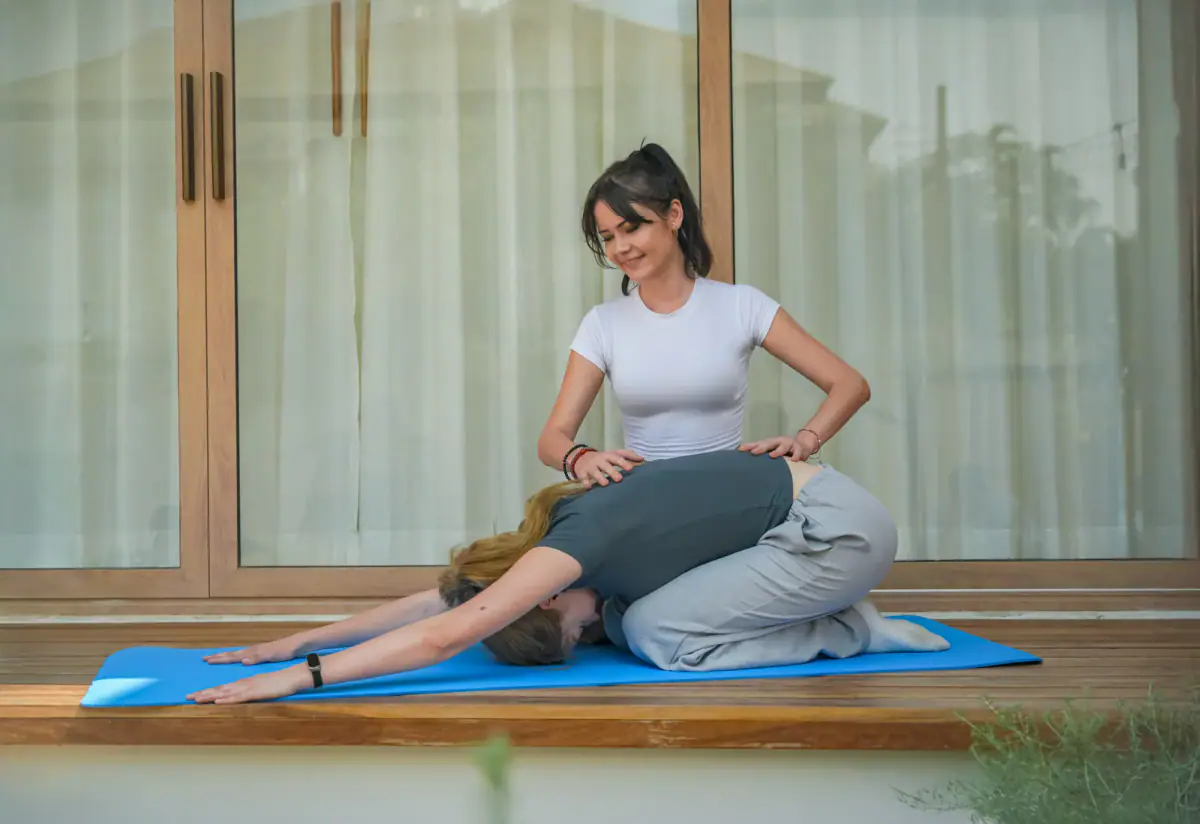
A yoga teacher should get consent for hands-on adjustments twice: in writing at intake and verbally before each touch, and every adjustment should have a no touch alternative. In a private lesson, you and one student share a closed room, so the routine has to be stronger than in a class where a room full of people is present. The steps below fit any private room you rent by the hour and take under two minutes to run.
Step one: the written opt in at intake
Put touch on the intake form as its own question, separate from the liability section. A clear version reads:
- Would you like hands-on adjustments? Yes, No or Ask me each time.
- Are there areas of the body where you do not want to be touched?
- Do you have any injuries, recent surgery or conditions I should know about? If so, your physician or physical therapist should clear a plan before we begin.
- You can change any answer at any time, including in the middle of a lesson.
Keep the form on file and bring it to each lesson. A student who chooses “No” gets a lesson built around cues and props, and that is a complete lesson, not a downgrade. For the wider habits of setting limits with clients, how trainers set client boundaries lines up well with this routine.
Step two: the verbal script before each touch
Before any contact, say what you will do, where and why, and ask for a yes. Short scripts you can adapt:
- “I would like to adjust your hips in this pose. May I place my hand here?”
- “I can guide this with a block or with a light touch on your shoulder. Which would you prefer?”
- “Say stop or pause at any point and I will release right away.”
Wait for the answer. Silence is not consent. A nod is better than silence, but a spoken yes is the standard. If you cannot explain the adjustment in a sentence, you are not ready to give it.
Step three: the stop word and the read of the body
Agree on a stop word at the start of the lesson, such as “pause”, and use it the same way every time. Then learn to read the signals that precede the word: holding the breath, tightening the jaw, pulling away or going quiet. Treat any of these as a no, even if the student said yes a moment ago. After a flinch, remove your hands, step back and offer the pose without contact.
Step four: touch with a purpose and a lighter hand
When the student says yes, use touch only for these purposes:
- To show direction, such as the line of a spine or the rotation of a thigh.
- To support, when a student wants help holding a position.
- To calm, when a student asks for a grounding hand on the back.
Use the flat of the hand, apply light pressure, stay clear of sensitive areas and release before you speak again. Never adjust in a way that causes pain. The goal is information, not correction by force.
When to skip touch entirely
- Any new student in the first lesson, unless they ask for it. Earn trust first.
- Any student who answers “No” or “Ask me each time” and seems unsure.
- Any pose where the student has described an injury, surgery or pain in the area.
- Any time you are unsure about your own training for the adjustment.
- Students under 18, where a parent’s written permission and a different setup are needed. The paperwork for minors is covered in youth coaching guidance.
Documenting what happened
After each lesson, add one line to the student’s file: whether touch was used, in which poses and whether the student’s preferences changed. If a student reports discomfort, pause the lesson, offer a verbal alternative and note what happened. If an injury or complaint occurs, follow the steps in what to do if a client gets injured and notify your insurer, since policies differ on how they treat physical adjustment; yoga teacher insurance explains the exclusions to read.
Medical questions belong with a physician or physical therapist. You teach within their clearance and do not diagnose or treat.
Why the room matters
A rented private room gives you control: the door closes, the lighting is adjustable and no one else walks through. That privacy is a benefit and a responsibility. At FlexWerk in Carmel, private spaces rent by the hour with no lease or membership, which makes it easy to test your consent routine with a real student before you rely on it. The routine above costs nothing, and a student who feels safe tends to come back.
Related questions
Is verbal consent enough or do I need it in writing?
Use both. A written opt in at intake sets the baseline and a verbal check before each touch confirms it in the moment, which matters because comfort changes from day to day.
What if a student says yes to touch but flinches?
Treat the flinch as a no. Pause, step back, thank them for the signal and offer a verbal or prop based alternative for that pose.
Can I keep a private lesson door closed?
A closed door is normal in a private room, which is exactly why a written routine matters. Tell the student where touch may happen and agree on a stop word before you begin.