
VO2 Max Testing Space for Exercise Physiologists
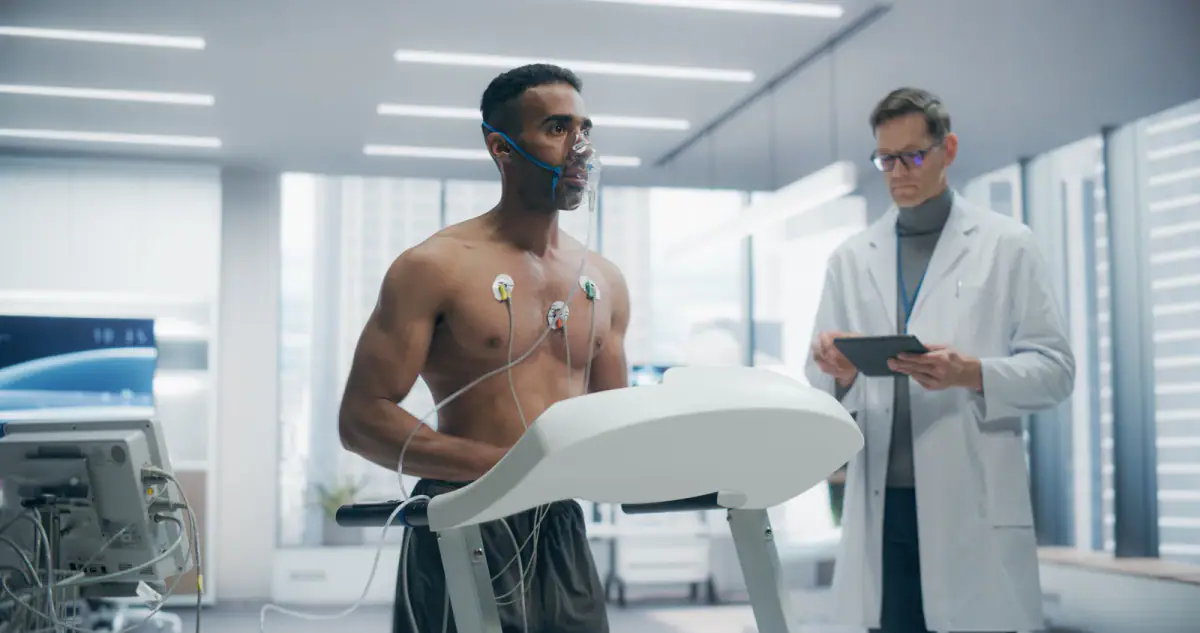
A VO2 max testing space needs enough floor for a metabolic cart and treadmill or bike, good airflow, dedicated power, secure gas storage and a clear emergency plan, and the testing itself should run only under physician-aware clinical protocols. Maximal exercise is not casual training: a participant’s own physician should clear them first where the protocol requires it, and a qualified exercise physiologist runs the test. Before you shop for a room, ask about the setup and decide what your protocol needs from it.
Who should be testing
VO2 max testing pushes a participant to or near their limit while the equipment monitors breathing gases. That is why professional guidelines and clinical protocols address screening, supervision and stopping rules. Exercise physiologists and other clinicians trained in these protocols are the right people. A coach who is not trained and credentialed for maximal testing should refer and instead use submaximal field tests or retest dates in training.
Participants should talk with their physician before any maximal test, especially if they have heart, lung, metabolic or blood pressure concerns, are older, or are new to hard exercise. FlexWerk is not a medical facility. Clinical care and medical decisions stay with the clinicians involved.
What the room has to do
Think of the room as an environment you control, not just a place with equipment.
| Need | Why it matters | What to check |
|---|---|---|
| Floor area | Cart, treadmill or bike, and room to move around the participant | A tape-measure walk-through |
| Airflow | Heavy breathing and heat build up quickly | Whether the room can stay cool and circulated |
| Power | Analyzers and ergometers need steady circuits | Outlet count and shared loads |
| Access | Moving a cart through doors and halls | Door widths and a route from parking |
| Emergency route | Responders must reach the participant fast | A clear path and a known entrance |
FlexWerk spaces include WiFi, a TV or monitor and lighting you can control. Cardio spaces carry HYDROW rowers, CLMBR machines and curved treadmills, so check whether your protocol needs a motorized treadmill or bike and how you would arrange that. The cardio equipment page lists what each cardio space holds.
Calibration gas and storage
Many analyzers need calibration gas, often supplied in cylinders. Cylinders have their own storage rules, such as keeping them upright and secured, and a facility may restrict them. Plan how you will bring gas, keep it secure and take it away. If you cannot store it on site, build calibration around transport, and ask the facility team what is permitted before you commit.
Also plan for calibration time. Warm-up and calibration steps can take a good part of the hour, and they happen before the participant arrives.
Emergency set-up
Write the emergency plan before the first participant is scheduled, and rehearse it.
- Know the room’s address and the building entrance responders should use.
- Have a phone in hand and an emergency contact list for the participant.
- Confirm who on your team is trained in CPR and AED use, and ask a host whether an AED is on site and where.
- Define the stop criteria in your protocol and give the participant a way to signal.
- Decide who calls and who stays with the participant.
If a test goes wrong, call emergency services first and document afterward. Keep records of screening forms, consent and results where your protocol directs.
Booking the hour
Rooms rent by the hour with no lease. Hourly spaces start at $18 and cardio spaces at $12, and a fitness professional’s first booked hour is free. Plan a single test as a full hour, covering arrival, setup, calibration, the test, cooldown, cleaning and notes, and avoid back-to-back participants until you know your real timing. Each professional sets their own fees and terms, and you keep what you charge.
If you are weighing the move out of an institution, see the clinical exercise physiologist space guide and the private practice versus hospital comparison.
Related questions
Can any trainer run a VO2 max test?
Maximal testing carries medical risk, so it belongs with trained exercise physiologists or clinicians working under protocols that include physician oversight where required. Coaches without that training should refer.
Can I bring my own metabolic cart to an hourly space?
Ask the facility before you plan the booking. Equipment size, setup time, storage between sessions and gas cylinders all need approval, and the answer for a specific room comes from the pro support team.
How long should I book for one test?
Book the full testing time plus setup, calibration, cleaning and a recovery period for the participant. Rushing any of those steps costs more than the extra room hour.