
Am I Too Old to Become a Personal Trainer?
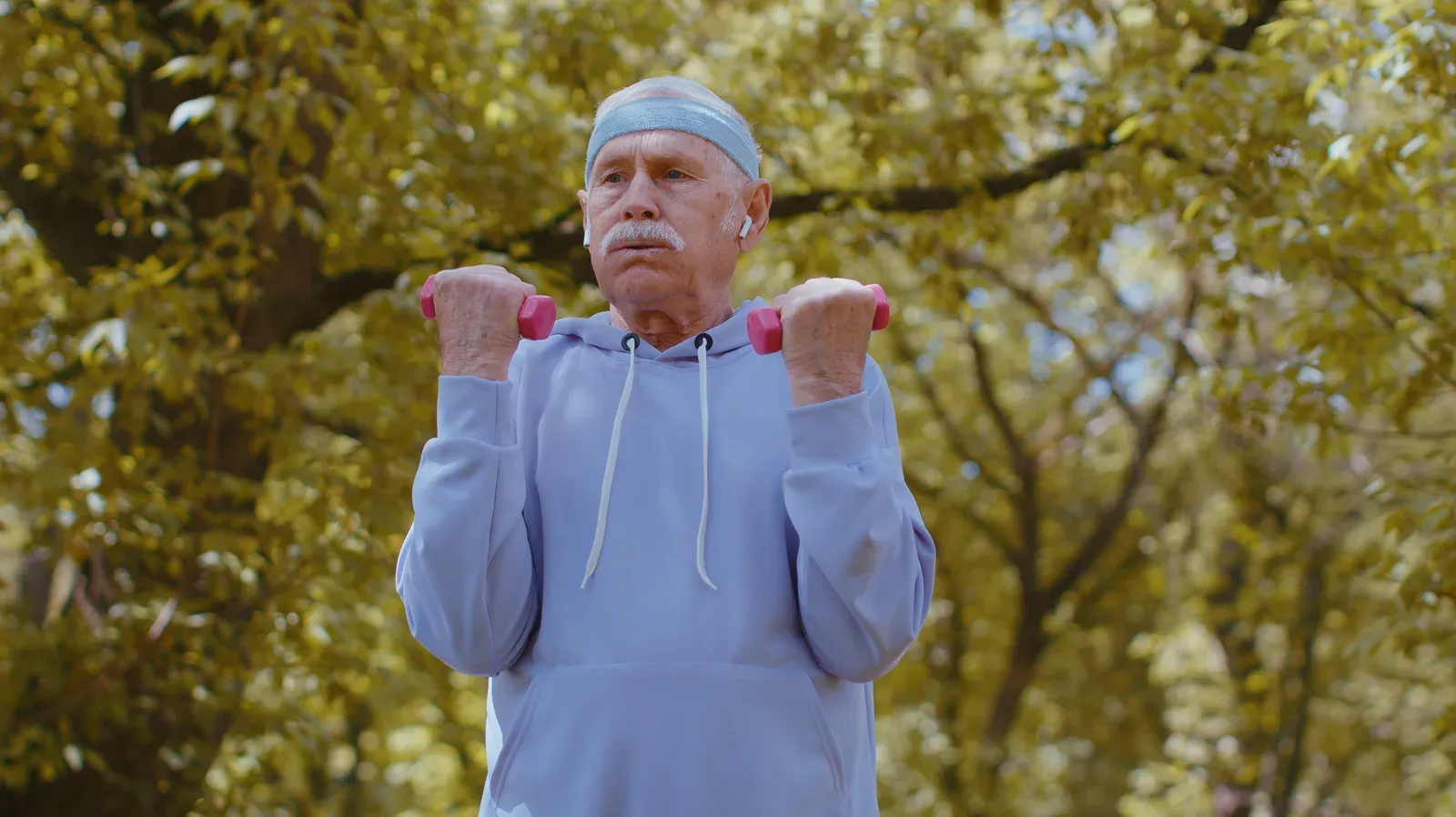
No. There is no age ceiling on becoming a personal trainer, and starting in your 40s or 50s is frequently an advantage: the clients with the most money and motivation are your peers, and they routinely prefer a coach who has lived what they are living. The honest caveats are about economics and patience, not age. Here is the real picture, both sides.
Why a later start is usually an asset
Clients hire trust before they hire exercise science, and a career changer walks in with twenty years of it. Adults in their 40s, 50s, and 60s, the demographic most able to pay premium coaching rates, often feel unseen by 24-year-old trainers and actively seek someone who understands joint history, career stress, and the difference between training at 50 and training at 25. Your age is not something to overcome in that conversation; it is the credential.
Ask around any training facility and the pattern repeats: the clients with the longest tenures are frequently training with coaches close to their own age, because the relationship runs on shared reference points. Career changers also arrive with the skills that actually decide training careers: showing up reliably, communicating with adults, running a calendar, and selling without sleaze. The industry’s chronic weaknesses are professionalism and business discipline, not squat knowledge, and midlife entrants tend to be strong precisely there. In a market like Carmel, where the clientele skews professional, with more than 100 corporate headquarters and a median household income north of $140,000, a coach who can hold a boardroom-grade conversation has a real edge.
The honest realities that apply at any age
The industry’s washout problem does not exempt you: most new-trainer careers end within one to three years, at every starting age, and the causes are economic. Building a paying roster takes months of unglamorous effort, employed gym jobs split every session with the house, and split-shift schedules grind people down. A later start adds two specific pressures: you likely have financial obligations a 22-year-old does not, and you have less appetite for years of low-earning apprenticeship.
The physical side is more manageable than people fear, but it is real. Coaching is a standing, moving job. The fix is coaching style: demonstrate with modest loads, cue with words and eyes rather than endless demo reps, and protect your own training and recovery deliberately. And if you carry health concerns into this career change, start with a conversation with your physician, not a message board.
The path that fits a later start
Start part-time, stay employed elsewhere, and let the training business earn its way into your week; this path was practically designed for career changers. Get certified while working your current job, coach your first clients in early mornings or weekends, and scale only when demand proves itself. Because private suites now rent by the hour, the experiment needs no lease and no gym employer: you can run your first session in a fully equipped private suite free, and after that you pay only for the hours you book.
The staged approach is mapped in detail in the five-client side-hustle model, and the certification landscape for Indiana independents is summarized in which certifications you need to train independently. Neither step requires quitting anything.
Money deserves the same staged treatment. Keep your reserves untouched, let training income prove itself for two or three quarters before it carries any real bills, and remember that self-employment income runs through different tax plumbing than a paycheck, including the 15.3 percent self-employment rate on net earnings. Rules vary by situation, so an hour with a CPA before you scale is cheap insurance.
Where older new trainers thrive
Private, 1-on-1 and small-group settings are where later-starting trainers do disproportionately well, and it is worth understanding why. On a big-box floor, trainers are interchangeable staff sold by the gym; youth and look carry weight there. In a private suite, the client is buying a specific person’s judgment and attention, which is exactly the terrain where experience wins. Privacy also matters to the clients themselves: midlife beginners, executives, and post-rehab clients often dread public gym floors and stay years with a coach who offers them a room of their own.
Specialization compounds the advantage. Recent industry surveys suggest about half of clients now look for a specialist, and the growth niches, longevity, menopause-adjacent coaching, older-adult strength, are ones a midlife coach can represent authentically. A 50-year-old marketing an over-40 strength practice is not fighting their age; they are leading with it.
There is a scheduling fit worth naming too: peer clients are often flexible-schedule professionals, and with 23.3 percent of Hamilton County’s workforce working from home as of 2024, the daytime hours younger evening-crowd trainers struggle to sell are exactly the hours your clientele wants.
How to decide, concretely
Do not decide in the abstract; run the two-step test. First, get certified, a self-paced process measured in months, while your income stays intact. Second, coach three real people, friends, colleagues, or first paying clients, for eight weeks in a professional setting and audit yourself honestly: Did you love the coaching hours? Did clients rebook and refer? Did the schedule fit your life? Those answers, not your birth year, are the decision.
Whatever the outcome, you will have lost nothing but a few evenings of study, and if the answer is yes, the room for your first client is already waiting, with the first hour on the house.
Related questions
Is 50 too late to get certified as a personal trainer?
No. Certifying bodies have no upper age limits, the coursework is self-paced, and many people certify in their 50s and beyond. The exam rewards study habits, which career changers usually have in abundance.
Will anyone hire a trainer who starts at 45?
Clients hire trust, and your natural market is your own peer group, adults 40 and up, who are also the demographic most willing to pay premium rates. Many prefer a coach who understands their stage of life firsthand.
What about the physical demands of the job?
Coaching is teaching, not performing. You demonstrate with sensible loads, coach with your eyes and words, and program your own training like an asset. Any persistent health concern is a conversation for your physician first.