
How to Teach Kickboxing One on One
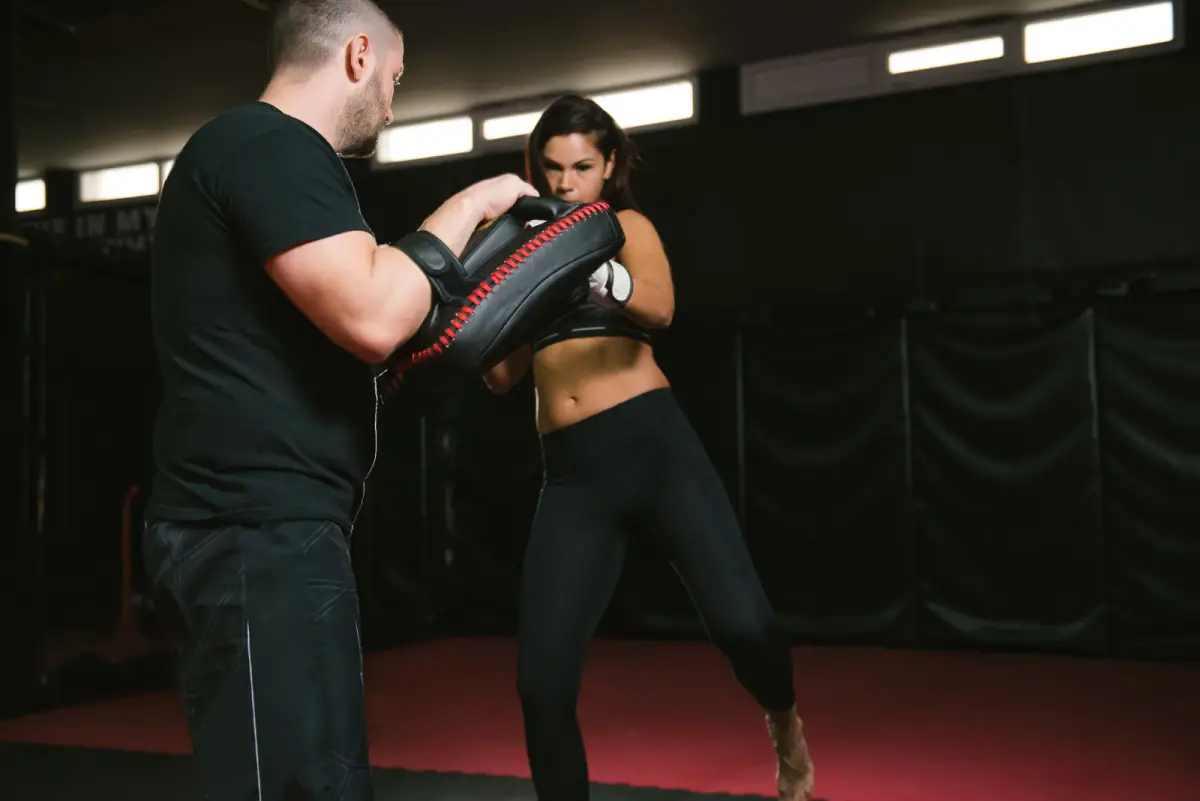
Teaching kickboxing one on one comes down to three skills: holding pads so the client’s strikes land correctly and safely, building combinations one element at a time, and arranging conditioning intervals around the client’s fitness rather than a fixed clock. Everything below assumes non-contact fitness work with no sparring. A private room, such as a workout space booked by the hour, gives a beginner room to learn without an audience and gives you a clear lane to move.
Pad holding is the teaching tool
Your pads are how the client feels technique. A few rules carry most sessions:
- Present the target, then hold still. The pad appears at the intended height and angle before the strike, not during.
- Meet the strike. A slight give with the wrist neutral protects your joints and tells the client the contact was clean.
- Call the combination clearly. Number the strikes or use a short word for each, and keep the language consistent for the whole session.
- Feed the rhythm. A slightly early or late target teaches timing; a random one just confuses.
- Watch the feet, not just the hands. Most errors begin in the stance.
Kicks need their own target: a pad held low and angled, with the holder braced and a clear lane behind them.
A progression ladder for combinations
Teach one new element at a time, then combine.
- Week one: a stance, a jab, a cross, then jab-cross.
- Week two: add a hook, then a low kick, each alone and then in pairs.
- Week three: add a defensive movement such as a slip or a step off the line.
- Week four: chain three strikes with a movement and a reset.
If this, then that: if the client loses balance, go back one step; if they perform cleanly twice in a row, add one element; if they tire, shorten the combination and keep the form.
Conditioning intervals around the pads
Alternate pad rounds with conditioning that does not need boxing equipment. A strength space carries a custom lifting rack, a cable system and dumbbells; cardio spaces have HYDROW rowers, CLMBR machines and curved treadmills, as listed in what is in a FlexSpace. A simple pattern is a pad round, a short station, rest, repeat. Match the work to the client: shorter and gentler for a beginner, tighter rests for someone fit. Anyone with a medical condition should have clearance from a physician before starting.
Gear and the room
Pads, mitts, gloves and wraps travel with you; bringing your own equipment covers the carry-in rules. FlexWerk rooms do not hold a heavy bag or a ring, so this is a pad and conditioning format.
Know the credential question
If you charge for lessons, clients and insurers will ask what you are qualified in. Kickboxing instructor certification explains the difference between fitness and combat-sport credentials. If you want a coach to teach you, flexwerkfitness.com has a free consultation.
Build a cool-down that closes the session
End every lesson with two minutes of easy walking, shoulder and hip mobility and a few slow breaths, then a quick review: one thing done well, one thing to focus on next week. Clients remember how a session ended, and a calm close makes the next booking easier to say yes to.
Next step: write a four week ladder for your client, bring your pads and book one room hour to test the first week.
Related questions
How long should a one on one kickboxing session be?
Sixty minutes is common, split between warm-up, rounds of pad work, a conditioning block and a cool-down. Beginners often need shorter pad rounds and longer rest.
How do I protect my wrists while holding pads?
Keep a neutral wrist, bend the elbows slightly, meet the strike rather than bracing against it, and hold the pad at the angle that sends force into the forearm, not the joint. Rest between rounds and stop if anything hurts.
Can I run kickboxing without a heavy bag?
Yes. Pad rounds, shadow rounds and conditioning intervals build a full session without one. A room with strength equipment also lets you alternate rounds with stations.