
Space for Occupational Therapy Fall Prevention Sessions
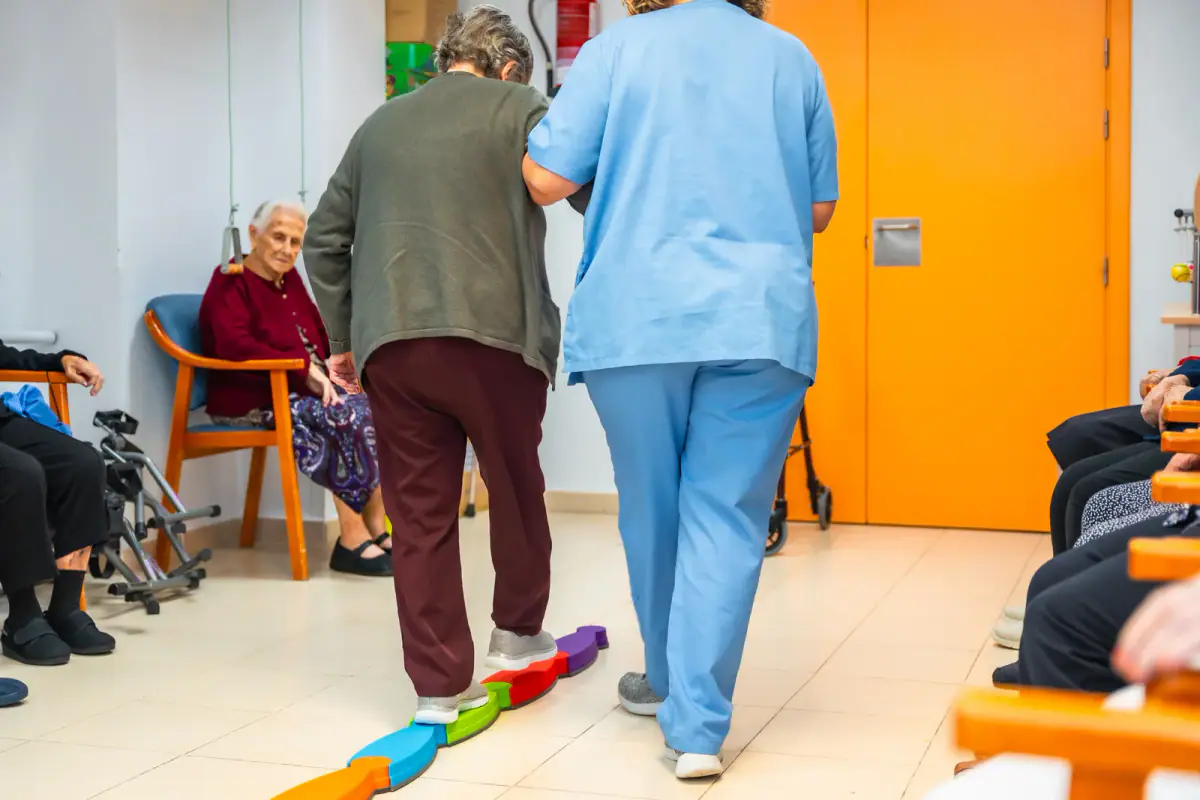
Fall prevention work begins with the client’s physician or therapist clearing them to exercise, and a licensed occupational therapist, not the room, owns every clinical decision. For a private pay OT, a good fall prevention space is small, private, step-free from the car to the chair, and checked in person before the first older adult arrives. This page covers what to confirm, in plain exercise terms and with no treatment claims, if you want a room that suits a private pay practice.
Check the route first, then the room
An older client’s session starts at the curb. Walk the route yourself, as a first-time visitor would, and write down what you find.
- Parking to the door. FlexWerk Carmel has garage parking a short walk away. Time the walk and note any curb, slope or door you would want help with.
- Entry to the room. Check for stairs, a threshold or a long corridor between the entrance and your room, and ask the host which rooms are easiest to reach.
- Inside the room. Look at the floor, the lighting, the seating and the space around any equipment you might bring.
The facility cannot answer these from a brochure, so a tour is the real test. Stairs and handrails are not part of what FlexWerk has promised on this page, so bring what you need and plan around what you see.
Why small private sessions fit
Balance work for older adults commonly goes better with one person, or a few at most, because the therapist watches each person move. A Standard FlexSpace is built for one or two guests, a Plus space for up to four, so the room supports individual or very small group sessions and not a class of ten. Privacy also helps clients who feel self-conscious about losing balance in front of strangers. For how a trainer runs a four-person balance program, see the balance and fall prevention space guide, and for the neighborhood fit see senior fitness space near Fishers.
Questions to ask the physician first
- Is this client cleared for general exercise, and for balance work specifically?
- Are there movements to avoid, such as certain positions or loading?
- What symptoms should stop a session, and whom should we call?
- Do you want an update after the first few sessions?
If the answers are not clear, the session waits. A licensed OT follows their own scope and documentation rules, and anyone else leading balance exercise should stay in the lane of general exercise.
What to bring and what to leave
| Bring | Ask about | Leave to the clinician |
|---|---|---|
| A stable chair, a sturdy support, a gait belt if you use one | Floor type, seating, lighting | Fall risk assessment and diagnosis |
| A simple paper checklist for each visit | Space around the equipment | Treatment decisions |
| A phone and a written emergency plan | Where the nearest help is | Changes to medication or activity limits |
A small kit that you control takes the guesswork out of the room. The same advice applies to a rented treatment space in general, and the hourly treatment room answer shows how clinicians set it up.
The business case, kept honest
An hourly room fits fall prevention because sessions are scheduled and short. Hourly booking costs $18 to $22 at FlexWerk with nothing long term attached, and fitness professionals can claim a free first hour through get started. Each professional sets their own fee and terms, and the facility provides space and no clinical services. Insurance, consent and documentation all stay with you.
What to do this week
Book a tour at your preferred hour, walk the route from the garage with a stopwatch, and write down every step, threshold and door. That one page will tell you whether this room suits your clients before any of them arrive.
Related questions
Can a trainer run fall prevention sessions without a clinician?
A trainer can lead general strength and balance exercise for a client whose physician has cleared them, but assessing fall risk or treating a condition belongs to a licensed clinician.
Does the room have stairs or handrails?
Do not assume. Ask the host and walk the room on a tour, then plan the session around what is actually there, and bring a stable chair or support of your own if you need one.
How many older adults can join one session?
Room size sets the limit. A Standard FlexSpace suits one or two guests and a Plus space up to four, so a small private session fits and a larger class does not.