
Return to Sport Testing Space for Physical Therapists
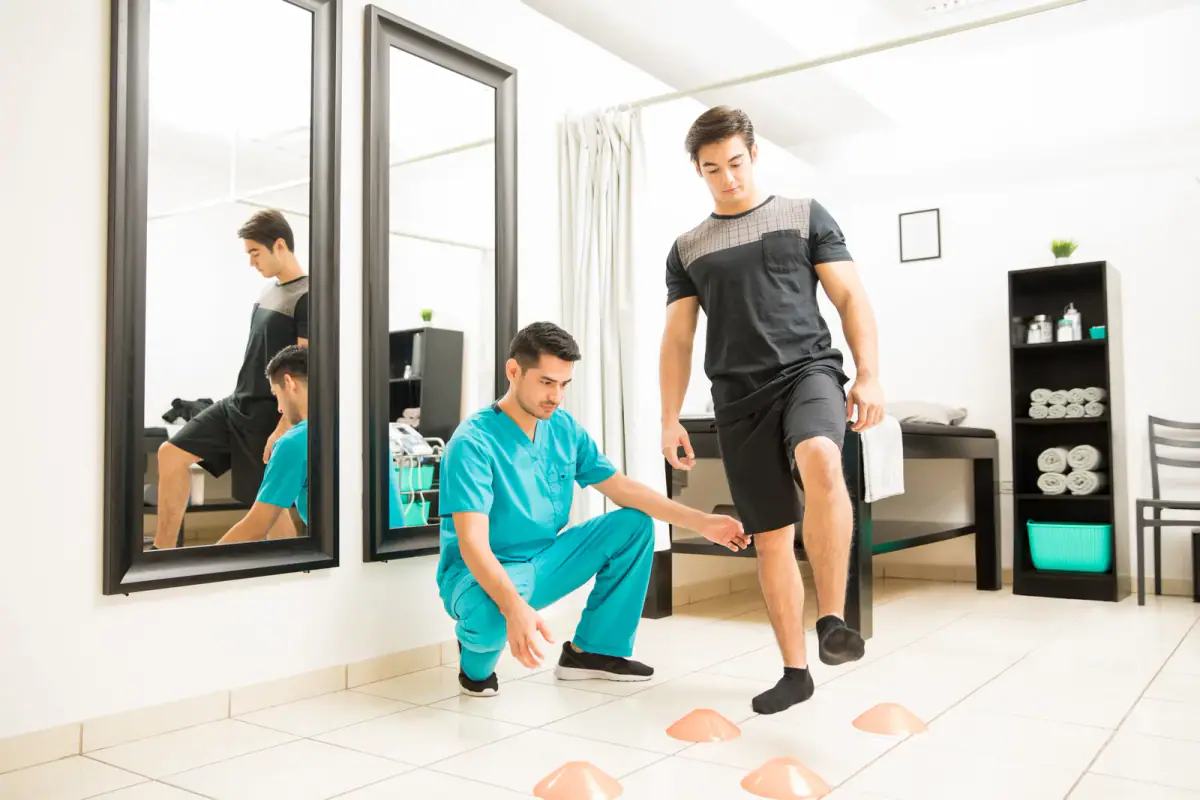
Return to sport decisions belong to the athlete’s surgeon and treating physical therapist, and nothing about a rented room changes that. For a PT who runs these tests, the useful question about a space is whether it gives a clear straight lane for hopping, a clean spot for strength testing and a safe area for cutting drills, all measured with the fixed equipment in place. This page covers layout and logistics for a PT using a private room, and it makes no claims about readiness or outcomes.
Break the visit into three stations
A typical battery, as clinicians commonly describe it, covers strength, hopping and change of direction. Each needs a different footprint.
| Station | What it needs from the room | Check on a tour |
|---|---|---|
| Strength testing | A stable seat or bench, room to position a handheld device, a place for the athlete to rest | Where the seat sits relative to walls and equipment |
| Hop testing | A straight, clear lane long enough for the distance hops, with a safe landing and a marked start line | Clear length with the rack and cable system in place |
| Cutting and agility | Space for cones and a direction change, with a margin for a stumble | Clear width, floor surface and distance from fixed equipment |
The hop lane is the limit. FlexSpace Standard rooms are 150 square feet and Plus rooms are 200, with a custom lifting rack, a cable system and dumbbells fixed in the space. Neither dimension tells you the straight clear length, so measure it yourself, in the room you plan to book.
How to measure a room on a tour
- Walk the longest clear line with a tape measure, from wall to wall, then note what sits in that line.
- Mark the athlete’s start line and landing area, and leave a margin past the last landing.
- Repeat the check for the width you need for cones and a direction change.
- Look at the floor surface for grip and spills, and test the lighting.
- Write down the numbers and compare them with the protocol your clinic uses.
If the lane does not fit, divide the visit. Do strength and movement testing in the room, and run longer drills at a field or another space your clinical team approves. For athletes who also need conditioning space, see sports performance facility rental near Fishers.
Questions to confirm with the surgeon and your protocol
- Which tests does the surgeon want, and by what date?
- Which movements are not yet cleared for this athlete?
- What would make you stop a test early, and whom do you call?
- Who receives the results, and in what form?
These belong with the clinical team, not the facility. A trainer who joins later builds on the results only after clearance. For how a PT frames that boundary, see wellness visits versus treatment.
Setting up an hour that works
Put all equipment on a short list, set up stations in the order you will test, and keep a laptop or tablet out of the landing path. Consent forms, injury history and documentation stay in your own systems. FlexWerk supplies a private room, with music, lighting and a screen under your control, and no clinical services. Rooms rent from $18 to $22 an hour at Carmel City Center, with no lease or membership, and fitness professionals get a first free hour through get started. Each PT sets their own fees.
A practical next step
Book your free hour for a measuring tour, and take a tape measure, cones and your testing checklist. Within an hour you will know which stations fit and which belong somewhere else.
Related questions
Who decides when an athlete is ready to return to sport?
The athlete's surgeon and treating physical therapist, with the athlete. A room provides space for testing and never makes the decision.
Can a trainer run return to sport tests?
A trainer can support conditioning once a clinician has cleared the athlete, but selecting, scoring and interpreting return to sport tests belongs to a licensed clinician.
Does a Standard room fit a hop test?
Do not guess. Hop tests need a straight run and a safe landing area, so measure the room on a tour, with the equipment in place, before you plan a battery of tests there.