
Outlets and Power in a Training Room: What You Need
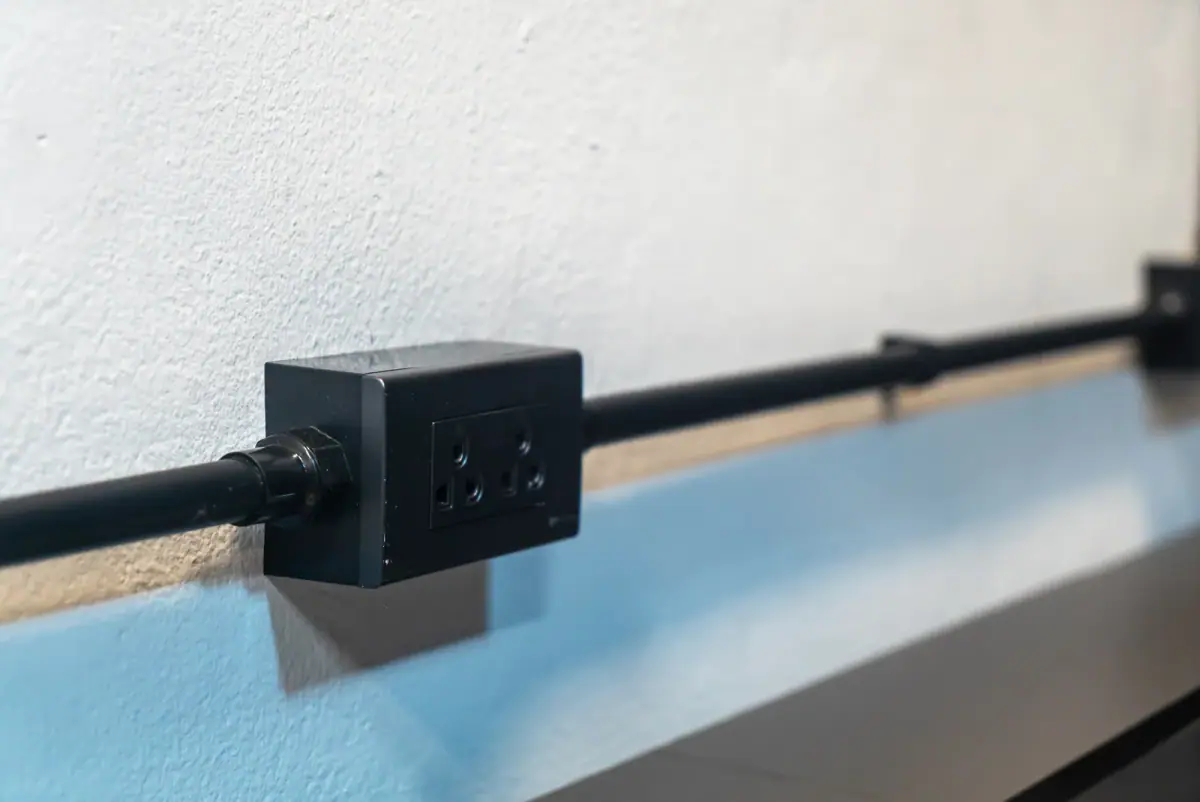
Count the devices you plug in during a session, compare that number to the outlets in the room, and bring a portable battery for the gap, because a dead laptop or a dying speaker costs you more than any missing outlet. The check takes two minutes on a tour, and it is easy to forget until you are standing in a room with one outlet behind the rack. Here is how to count, what to ask and how to plan.
Count your devices first
Write the list before you tour. A typical independent trainer might carry:
| Device | Used for | Draws power? |
|---|---|---|
| Laptop | Programming, forms, slides | Often, over a long session |
| Tablet or phone | Notes, client app, timing | Charge between sessions |
| Speaker | Music, if not using the room’s | Battery or cable |
| Scale or assessment tool | Weigh in, body measures | Often battery |
| Recovery device | Massage gun, light, heat | Battery or cable |
| Camera or light | Filming sessions | Usually cable |
Circle the items that must plug in for the whole session. Those are the ones your room needs outlets for.
Compare against the room
On tour, count outlets and note where they are. A single outlet behind equipment is no outlet at all. Check:
- Number and position. Reachable without moving heavy items.
- Distance to where you work. A cord crossing the floor is a hazard.
- Whether they work. Plug in a phone charger and see.
- Who controls them. Some outlets are switched or reserved.
Every FlexWerk space includes WiFi, music streaming and a TV or monitor, so many coaches can leave a speaker and sometimes a tablet at home. Read what the room includes before you pack.
Plan for the shortfall
If the outlet count is low:
- Charge devices at home and carry a portable battery with the right cable.
- Use the room’s music and screen in place of your own.
- Pick battery powered tools for assessment and recovery.
- Ask the host whether a power strip is allowed, and tape any cord flat if so.
Bringing your own equipment lists the questions about what you may carry in and how.
Safety on the floor
Cords are the number one trip hazard in a small training room, and clients move with weights in their hands. Keep cables along walls, never across a path to the rack, and do not run cords near water bottles. A coach who keeps the floor clear is a coach whose clients trust the room.
What to ask the host
- Where are the outlets, and are any reserved?
- May I use a power strip?
- Is there any rule on charging a device at the wall?
- What do I do if an outlet stops working?
The pro support team at prosupport@flexwerkfitness.com answers these, and you should keep the reply. The tour checklist shows where this question sits alongside equipment, privacy and the client route.
Booking and cost
Rooms start at $18 an hour, and your first hour is free via get-started. Use it for a full dress rehearsal with every device you plan to bring and see which one you forget. Anything that fails in a rehearsal can be fixed before a client sees it.
Related questions
How many outlets does a trainer actually need?
Count your devices: a laptop, a tablet, a speaker and anything that plugs in for recovery or assessment. Most sessions need two or three, and a charged battery covers the rest.
Can I bring a power strip or extension cord?
Ask the host first. Rules about cords and strips are facility rules, and cords across a floor are also a trip hazard for clients.
What is the best backup if the room has few outlets?
Charge everything at home, bring a portable battery and use the room's built in music and screen in place of your own speaker where possible.