
How to Offer Running Gait Analysis to Clients for a Fee
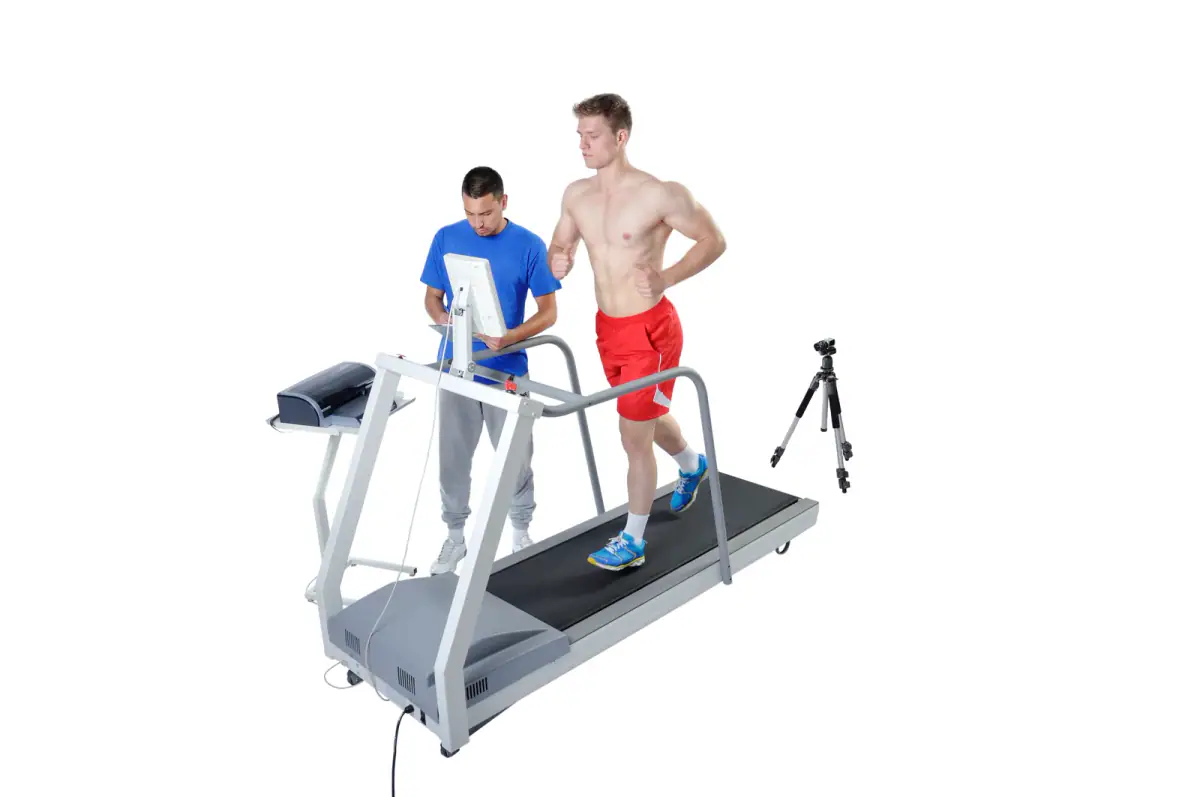
To offer running gait analysis for a fee, sell a single bookable session: film the runner on a treadmill from three angles, measure a short list of things you can actually see, send a written summary with two or three drills, and offer a re-film in six to eight weeks. The service works because it is concrete. The client leaves with footage, findings and homework, and you leave with a proof of your eye and, often, a new coaching client.
The treadmill protocol, step by step
Run the same sequence for every client so your reports are comparable.
- Warm up. Ten minutes of easy running so the footage shows normal mechanics rather than a stiff first mile.
- Set three cameras or three positions. Side view at hip height, rear view at the calves and hips, and a front view if there is room. A phone on a tripod is enough.
- Film three paces. An easy pace, a steady pace and a faster pace, thirty to sixty seconds each. Mechanics often change with speed, and that is part of the report.
- Use slow motion. Most current phones can record slow motion. Film at the highest rate offered.
- Note what the client wore. Shoes and clothing matter, so record them and keep them consistent for the re-film.
- Ask about the runner. Weekly mileage, goals, history of discomfort and whether a clinician has seen it, which keeps you out of diagnosis.
If you use a self-powered curved treadmill, say so in the report. It responds to the runner’s own effort, so footage from it is not directly comparable to a fixed-belt treadmill and a re-test should use the same surface.
What to measure and what to skip
Pick observations a client can see on the screen beside you:
- Cadence. Count steps over a minute from the video.
- Foot placement. Where the foot lands relative to the body, and whether the leg is reaching out in front.
- Trunk position. Upright, leaning from the ankles, or folding at the waist as the pace rises.
- Pelvic and knee behavior from the rear. Does the hip drop, does the knee track inward, are the feet crossing the midline?
- Arm carriage. Swing, tension and crossing the body.
- Asymmetry. Differences between the left and right side that repeat.
Skip anything you cannot support: strike-type labels with promises attached, injury predictions and claims that a number is “ideal.” Running form has real variation between healthy runners, and a good report says what changed and why you suggest it, not what is right for everyone.
Package the one-off session
A single paid session usually has four deliverables:
| Piece | What the client gets |
|---|---|
| Filmed session | Three paces, three angles, reviewed on a screen together |
| Written summary | Two or three observations in plain language, with stills |
| Drills | Two or three short drills and a strength cue to practice |
| Re-film | A shorter follow-up in six to eight weeks, priced separately or bundled |
Price it from your time, not from a menu. Add prep and filming, the session itself, and the write-up, then multiply the total hours by your own hourly value and add one booked hour of space. If your value is, for example, a figure you have set for your private sessions, three quarters of an hour of write-up on top of a one-hour session changes the answer more than the room does. Do not copy another coach’s rate or assume a figure from another profession; build yours from your costs, hours and positioning, as the pricing breakdown in how much running coaches charge does.
Where to run it
A private room helps for three reasons: a camera on a tripod needs floor space, nobody walks through the shot, and the runner is not self-conscious about being filmed. Cardio spaces at FlexWerk start from $12 an hour and include curved treadmills, WiFi and a TV for review, and the rooms are filming-friendly. The first hour is free for fitness professionals, which lets you test your protocol on a friendly runner before you charge anyone. A runner who wants to film their own form without a coach has a separate path in filming your running form on a treadmill.
Turn the session into coaching
The report should end with a choice. Some clients want the drills and nothing more; others want a plan and a person watching. Offer a short coaching block with a strength day and a form check, and the indoor setup described in training space for running coaches lets you do both in the same booking. Book a first hour, film yourself first, and fix your protocol before it goes on a client.
Related questions
Do I need special software to analyze running form?
No. A phone, a tripod and slow-motion video cover the basics. Software that overlays angles is a convenience you can add later, once you know which three or four observations you actually sell.
Can I promise that gait changes will prevent injuries?
No, and it is safer not to imply it. Describe what you observed and what you suggest changing for efficiency or comfort. Pain and injury questions go to a physician or physical therapist.
Should the analysis be a stand-alone service or part of coaching?
Offer both. As a one-off it is an easy first purchase that shows your eye, and a good report naturally leads to coaching for the clients who want the changes supervised.