
Flooring for a Personal Training Room: What Holds Up
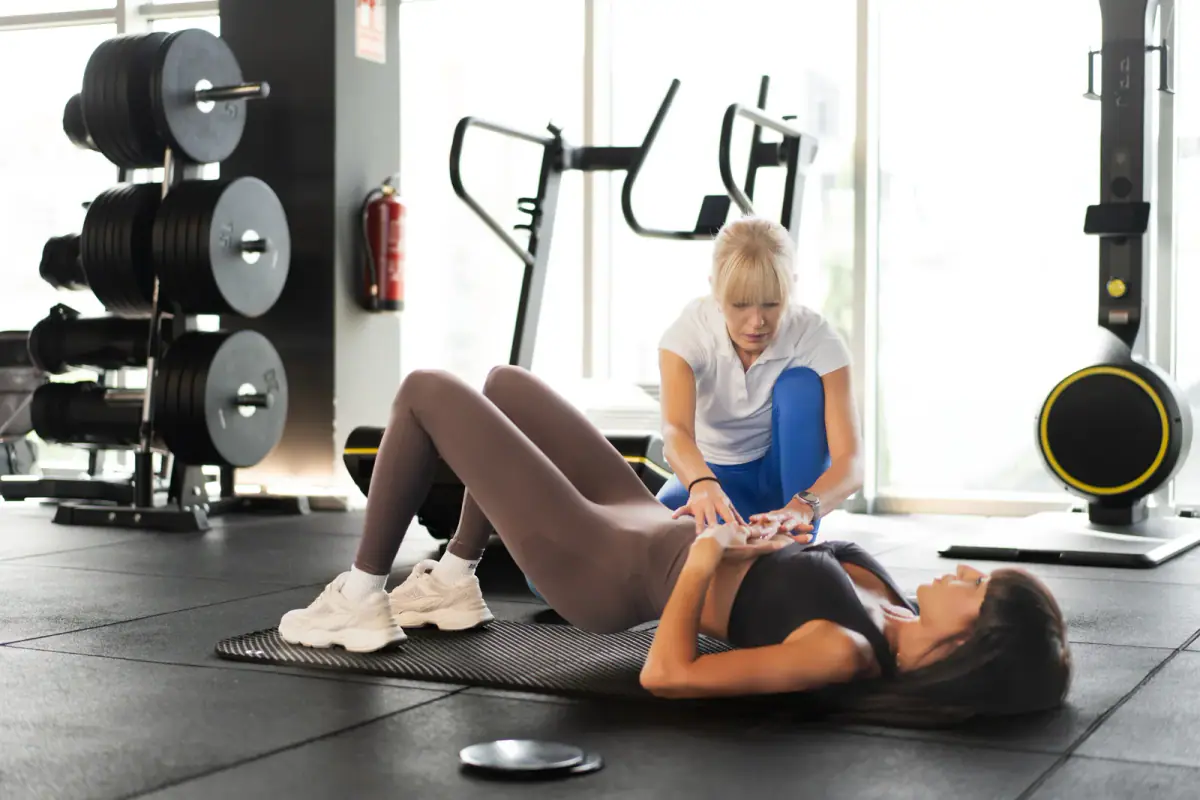
The right flooring for a personal training room is a firm, dense, slightly forgiving surface, usually rubber, that holds up under a dropped dumbbell, grips under a loaded squat and cushions a client lying down. No single floor does everything, so decide what your sessions need and then test the room against it. You can learn a lot in five minutes standing on it.
Three jobs a training floor does
Your floor has to handle three kinds of work, and each wants something different.
- Lifting. The floor must be firm, so a loaded bar does not sink one side. Soft or springy surfaces make squats feel unstable.
- Jumping and landing. The floor must absorb some impact without bouncing back unpredictably.
- Floor work. A client lying on the floor for mobility or core work needs a surface that is clean and comfortable without a separate surface under them.
A floor that excels at one is often mediocre at the others, which is why many rooms combine zones or ask coaches to bring a small tool for specific drills.
Read the floor in five minutes
When you tour, run these checks:
- Heel press. Press a heel hard into the surface. Any lasting dent means it is soft.
- Dumbbell drop. From knee height, drop a light dumbbell. A dull, short thud is good. A hollow echo or a bounce is not.
- Seams and edges. Look for lifting corners, gaps or loose tiles, which are trip hazards.
- Slip test. Walk in the shoes your clients wear and pivot once on the ball of the foot.
- Temperature. Stand barefoot or in socks for a minute. Cold, hard flooring is hard to lie on.
- Cleanliness. Look at the edges where dust collects. A well kept floor is a sign of a well kept room.
What each surface does
Rubber, turf and hardwood side by side goes through the comparison in detail. In short: rubber suits strength and conditioning; turf suits sleds, carries and short accelerations; hardwood suits movement, dance and gentle floor work but is less forgiving of dropped weights. If you need turf, turf space in Carmel explains the options.
Questions to ask the host
The facility does not publish floor specifications that this page can repeat, so ask the host in writing and verify in the room. Useful questions:
- What is the surface in my room, and is it the same in every room?
- Are there rules about dropping weights?
- Can I bring a small pad or tool for floor work, and where do I store it?
The pro support team at prosupport@flexwerkfitness.com answers facility questions. Work these into your tour using the tour checklist.
Booking and cost
Rooms from $18 an hour, and your first hour as a fitness professional is free via get-started. Use that hour to run your actual session on the floor, not just to look at it. Your joints and your clients’ joints will tell you more than a spec sheet will.
Related questions
What is the best flooring for lifting?
Dense rubber is the usual answer, because it is firm under load, absorbs a dropped dumbbell and grips well. Ask the host what the room has instead of assuming.
Can I do jump training on any floor?
Only on a surface that has some give and a stable base. Concrete under thin cover is the one to avoid for repeated jumps.
How do I tell what a floor is made of when I tour?
Look at the edges and seams, press with a heel, drop a light dumbbell from knee height and listen. A hollow thud or a visible dent tells you more than any listing.