
What's the Difference Between FlexSpace Standard and Plus?
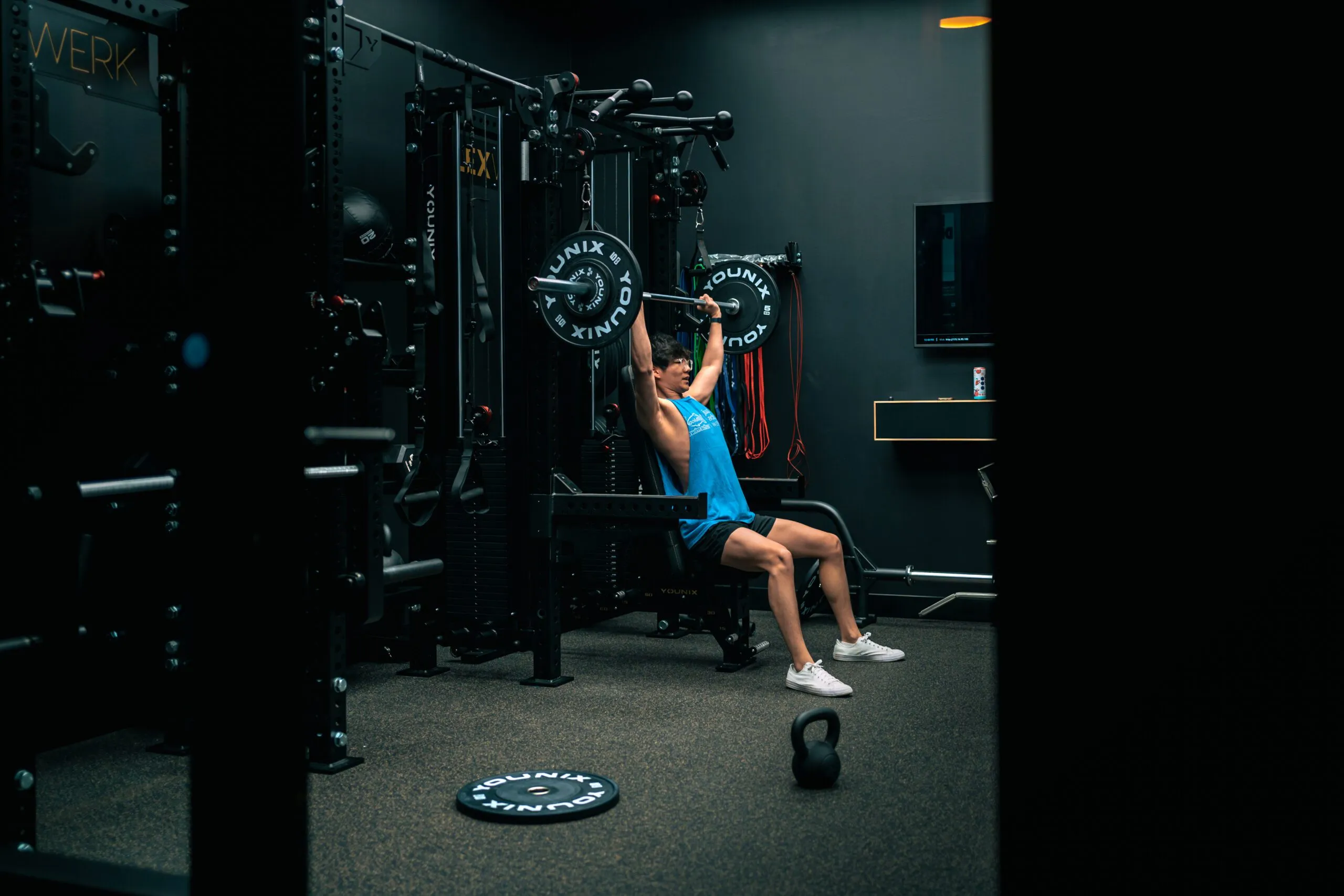
The difference comes down to size and headcount: a FlexSpace Standard is 150 sq ft, hosts 1 to 2 guests, and supports 850+ exercises; a FlexSpace Plus is 200 sq ft, hosts up to 4 guests, and supports 1,100+ exercises. Both are fully private, fully equipped rooms, the Plus simply buys you more floor, more capacity, and a wider exercise menu for sessions that need them.
Because suites book by the hour, this isn’t a one-time choice. It’s a per-session decision, and making it well is worth a few minutes of thought.
Side by side
| FlexSpace Standard | FlexSpace Plus | |
|---|---|---|
| Size | 150 sq ft | 200 sq ft |
| Guests | 1 to 2 | Up to 4 |
| Exercise library | 850+ | 1,100+ |
| Core equipment | Custom lifting rack, cable system, dumbbells | Expanded build on the same core |
| Best for | One-on-one, pairs | Semi-private, small group, movement-heavy work |
| Tech | WiFi, music streaming, TV/monitor, controllable lighting | Same |
Both room types share the qualities that define the suite model: a door that closes, equipment that’s yours for the hour, and an environment, music, lighting, screen, under your control. (Cardio machines are their own category: HYDROW rowers, CLMBR climbers, and curved treadmills live in dedicated cardio suites.)
When the Standard is the right call
For most trainers, the Standard is the daily driver. One-on-one sessions, the backbone of a typical independent book, simply don’t need 200 sq ft, and the Standard’s rack-cable-dumbbell core covers the movement patterns that general-population programming runs on. Pairs work too: a client and their partner, or a semi-private twosome, fit a Standard’s 1 to 2 guest capacity without feeling cramped, because the room is purpose-designed rather than a converted office.
The honest way to think about it: 850+ exercises is not a limitation you’ll bump into with a single client. If you’ve been picturing “small room” as “compromised session,” the fix is standing in one, purpose-built 150 sq ft trains much larger than the number reads.
When the Plus earns the upgrade
The Plus exists for the sessions where headcount or floor space genuinely changes the work:
- Small groups of 3 to 5. This is the unambiguous case, capacity alone decides it.
- Semi-private pairs you want room to run. Two guests fit a Standard, but some coaches prefer the Plus for pair sessions built on circuits or agility work where both people move simultaneously.
- Movement-heavy programming. Ground work, dynamic warm-ups, crawling patterns, anything where floor is the equipment.
- Filming with space in frame. All suites are filming-friendly, but wider shots and moving demos benefit from the extra footage.
- The expanded menu. 1,100+ exercises versus 850+ matters most to coaches whose programming leans on the additional setups.
There’s a business layer here as well. The Plus is the natural home of the semi-private model, several participants each paying a per-person rate that undercuts your solo price while the hour’s total exceeds it. Since guests of your clients get free access and you keep 100% of what you charge, the Plus is effectively the room where an hourly-space trainer scales revenue per hour without scaling hours.
Run the shape of that math once and it sticks: one client at your solo rate versus four people each paying a bit more than half of it. Same hour of your life, same booked room, meaningfully higher gross, and every participant paid less than solo training costs. That’s why experienced independents often describe their weekly Plus hours as the highest-leverage sessions on the calendar, and why the suite choice deserves more strategic thought than “which room is free.”
Mixing both across a real week
The suite decision gets easier when you stop thinking “which suite am I?” and start thinking “which suite is this session?” A representative week for an established independent trainer might look like:
- Early mornings: Standard suites, one-on-one, booked back-to-back so 6, 7, and 8 AM clients flow through a single room.
- Midday: a cardio suite for a conditioning-focused client, or a Plus booked off-peak as a content set.
- Evenings: Standards for singles, a Plus on the nights your couples train.
- Saturday morning: a Plus for the small group that’s become your highest-revenue hour of the week.
Every booking is priced as what it is, you never carry group-sized space on one-on-one days, which is precisely the waste a fixed studio lease forces you to accept. The spaces page shows the current lineup of suite types at Carmel City Center.
One honest boundary to draw: if your format is large-group, ten people, bootcamp energy, open floor, neither suite is your container, and pretending otherwise serves nobody. The Standard-Plus system is built for the one-to-five range where most premium coaching actually happens, and within that range it’s hard to outgrow: your business can move from solo sessions to a semi-private tier to small groups without ever changing facilities, just suite selections.
The reliable last word: this choice is much easier made in person than on paper, because square footage is an abstraction until you’re standing in it. Book the free first hour, run a session in a Standard, poke your head into a Plus on the way out, and the “which suite for which session” instinct will set itself within minutes, after which the only version of this question you’ll ever ask again is inside the app, one booking at a time.
Related questions
Can two people train in a Standard suite?
Yes, a Standard hosts 1 to 2 guests, which covers one-on-one sessions and pairs comfortably. At three or more participants, book a Plus.
Do I have to pick one suite type and stick with it?
No. Suites book by the hour, so you choose per session, a Standard for Tuesday's one-on-one, a Plus for Saturday's group of four. Your bookings can mix freely across the week.
Is the equipment different between Standard and Plus?
Both are built around the rack-cable-dumbbell core; the Plus's larger 200 sq ft footprint and expanded setup support 1,100+ exercises versus 850+ in a Standard.