
First Equipment to Buy as an Independent Trainer
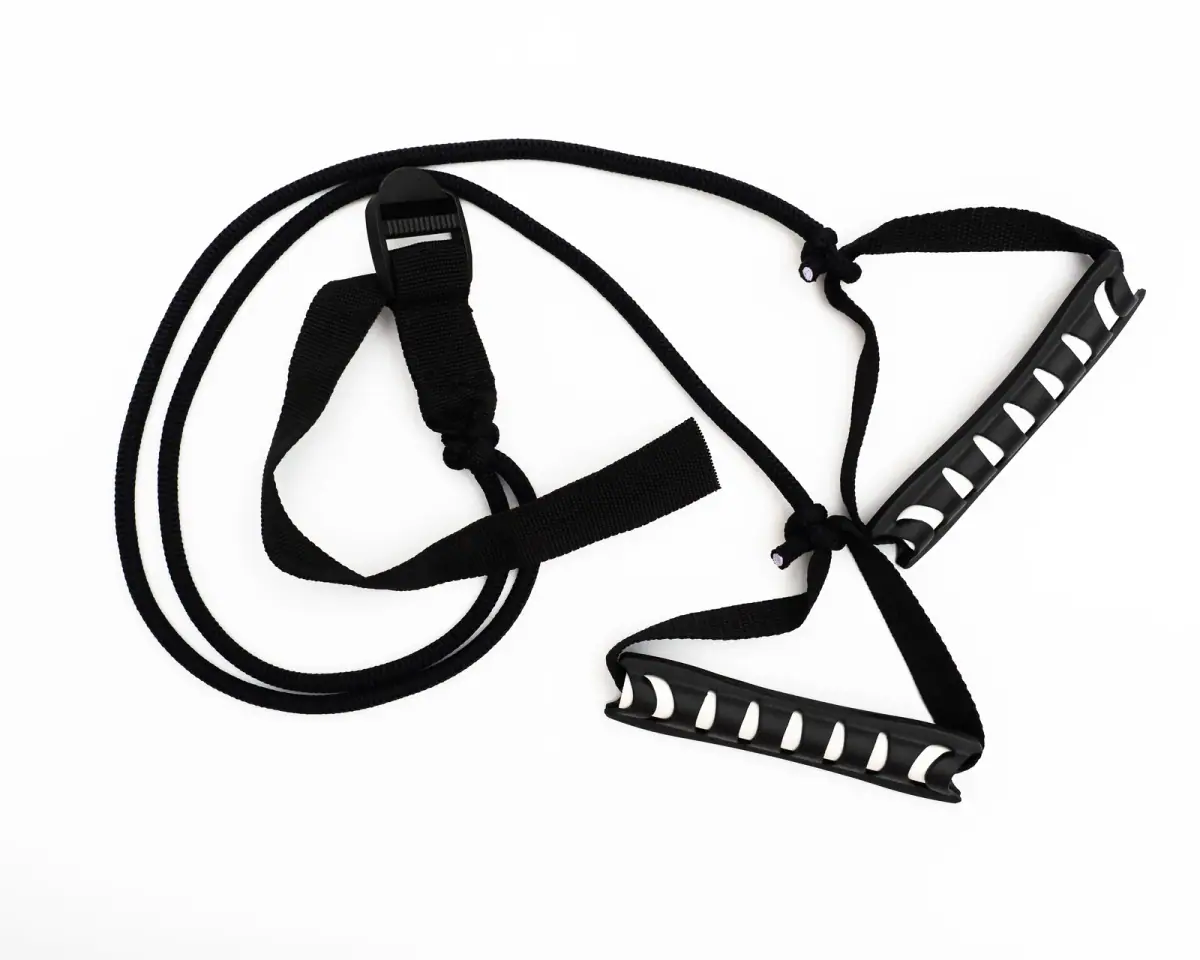
When the room already has a rack, cables and dumbbells, an independent trainer’s first purchases are small and portable: a set of resistance bands, a timer, a tablet or phone stand, a few assessment tools and a bag to carry them. Together they usually cost a modest amount, far less than a single piece of heavy equipment, and each earns its place by being used every week. Rooms with the heavy equipment included are why the list can stay this short.
The list, in the order to buy
Prices are rough bands from typical retail, and quality varies, so check current prices before buying.
| Order | Item | Rough band | Why |
|---|---|---|---|
| 1 | Bag that carries everything | Tens of dollars | Keeps the kit in one place |
| 2 | Loop and mini bands, a few resistances | Tens of dollars | Cheapest way to vary load |
| 3 | Timer or interval app | Free to low | Controls rest and tempo |
| 4 | Phone or tablet stand | Tens of dollars | Programming, filming, client notes |
| 5 | Tape measure and a tracking sheet | Low | Simple progress records |
| 6 | Suspension straps | Tens to low hundreds | Rows and presses with no machine |
| 7 | Foam roller or massage ball | Tens of dollars | Warmups and cooldowns |
Stop after item 4 until your clients tell you what is missing.
What the room already covers
At FlexWerk in Carmel, a Standard space has a custom lifting rack, a cable system and dumbbells supporting 850+ exercises, a Plus space supports 1,100+, and cardio spaces have HYDROW rowers, CLMBR machines and curved treadmills. The equipment in a FlexSpace explains the details. Each space also has WiFi, music streaming, a TV or monitor and controllable lighting, so a speaker and a screen are not on your list.
What to skip
- Anything heavy: plates, barbells, benches and racks, which the room supplies and which you would need to store and move.
- Duplicates of the room’s cable attachments: check what is there first.
- Branded gadgets with a monthly fee: wait until a client asks for one.
- Large sets of anything: buy one, use it, then expand.
The rule of three
Buy an item the third time you wish you had it. Once may be a one-off, twice may be a coincidence, and three times is a pattern. Keep a note on your phone for each time you improvise, and review it monthly. Bringing your own equipment to a rented space covers carry-in etiquette once your kit grows.
Equipment that supports a higher rate
A few purchases are about positioning, not convenience. A trainer who offers movement assessments, for example, might add tools for range of motion or balance testing that fit the practice. Choose them to match the clients you want, and confirm that they sit within your scope of practice as a trainer. Do not diagnose or treat; assessment in this sense means noting how someone moves in order to program training.
Budget it
Add the list to your first-year budget and track the real cost of each item. A startup budget for an independent trainer shows where equipment sits next to room hours and insurance. For a comparison of the other ways to work without owning a facility, see training clients without owning a gym.
Pack the bag, book a session, and note what you reach for.
Related questions
Should I buy a rack or bench for my own use?
Not as a first purchase. If your sessions happen in a room with racks, benches and machines, owning your own adds storage, cost and transport problems. Wait until you know you need one at a fixed location.
Are the prices here exact?
No. They are rough bands from typical retail, and quality varies widely. Check current prices before you buy, and start with the lowest priced item you will actually use every week.
What is the first purchase that pays for itself?
Usually the item that makes your sessions different from anyone else's in the room, such as a set of assessment tools or a signature band set, because it supports a higher rate rather than just saving time.