
Equipment for Youth Athletic Training in a Rented Room
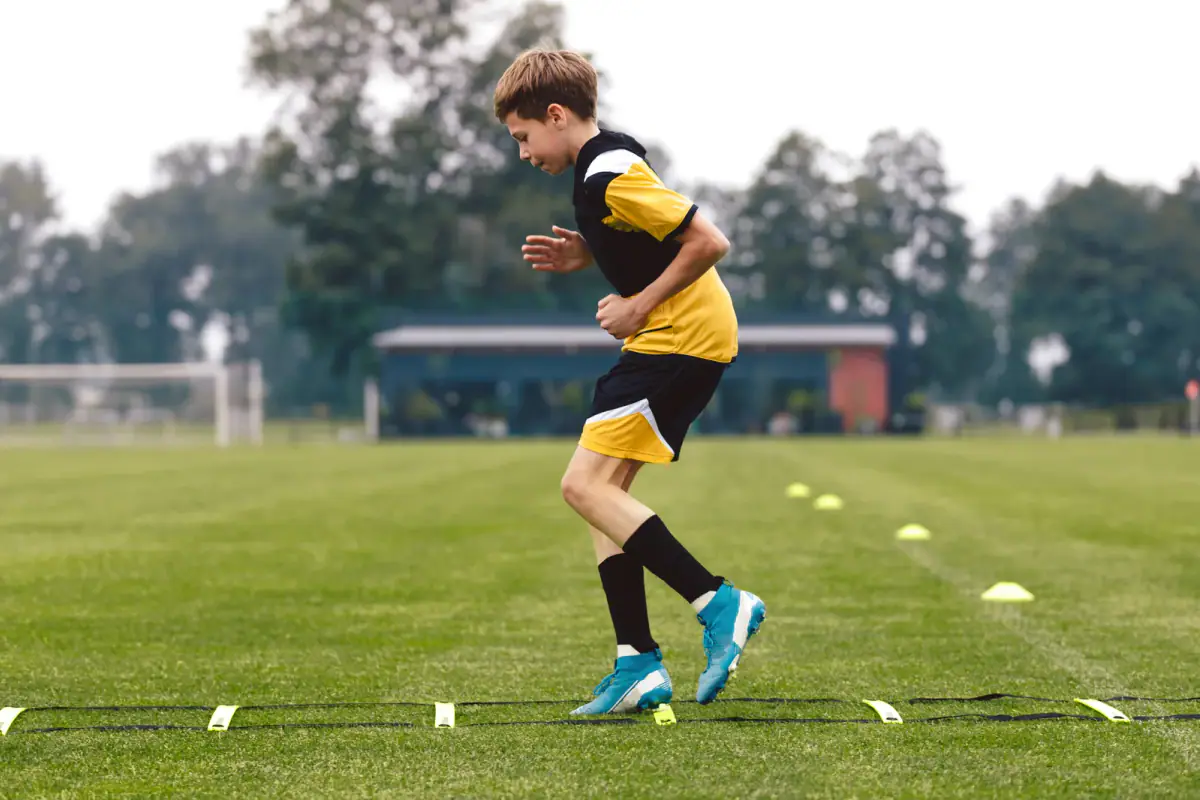
Youth athletic training in a rented room runs on a small, portable kit: an agility ladder, cones, bands, light implements such as small medicine balls, and the smallest dumbbells, with the room’s heavier equipment used selectively for technique. The rooms are compact, so the main thing to confirm is how much clear floor you have for movement, not how much iron there is. Below, a kit you can pack and the questions to settle before a young athlete shows up.
The portable kit
- Agility ladder. For foot patterns and warm ups. A flat one lies safely on most floors.
- Cones or markers. For cutting, shuffling and reaction drills. Eight is a flexible number.
- Resistance bands. For band walks, hip and shoulder activation, and assisted pulls.
- Light medicine balls. For throws and rotational work, if the ceiling and floor allow.
- Jump rope. For rhythm, conditioning and warm ups.
- A stopwatch or timing app. For testing and fair comparison from week to week.
Pack each item in a bag you can carry in one trip. Bringing your own equipment covers the host questions about carrying and storage.
What the room adds
The room holds a custom lifting rack, a cable system and dumbbells. For young athletes, the cable system is useful for rows and light rotational work at low loads, and the dumbbells let you teach a goblet squat or a hinge with a light weight. What is in a FlexSpace lists the equipment. Whether the rack is appropriate depends on the athlete’s age, maturity and your plan, so use it for coaching technique, not for chasing loads.
Check the floor length, not just the gear
Speed and agility work needs clear distance. Pace out the usable length and width of the room when you tour, then plan your drills to fit: short accelerations of a few steps, cone patterns inside a square, ladder work along one wall. A Standard space is 150 sq ft and a Plus is 200 sq ft, which suits tight, technical work and does not suit long sprints. If your athletes need more distance, a turf corridor or field house may be the better place for that part of the week.
Policy before equipment
Young athletes bring parents, waivers and questions about injury. Settle these first:
- A parent or guardian signs your waiver. Indiana courts have upheld parental pre-injury releases in some circumstances, but enforceability depends on the facts, so have an attorney review it.
- Decide where parents sit. In the room, or outside, and put it in writing.
- Age appropriate loading. Keep to technique and bodyweight until a young athlete can show it, and read when kids can start strength training.
- A plan for injuries. Know who to call and tell the parent immediately.
Cost
Rooms start at $18 an hour, and you set your own rates for athletes and families. You keep 100% of what you charge. A fitness professional’s first hour is free via get-started, so you can test the drill footprint with a friend’s child or a colleague before you promise a group a session.
Related questions
What weights do young athletes start with?
Bodyweight and light implements first, then small increments as technique holds. Focus on movement quality and coaching, and check the smallest dumbbell in the room against your youngest client.
Is an agility ladder enough for speed work?
A ladder trains foot patterns, and cones train direction change. Add short sprints or acceleration drills only when the space allows it, and ask the host whether the room has enough clear length.
Does a parent need to stay in the room?
Set the rule up front and in writing. Many coaches ask a parent to stay for minors, and the host can tell you about facility rules for minors.