
Equipment List for Small Group Conditioning Sessions
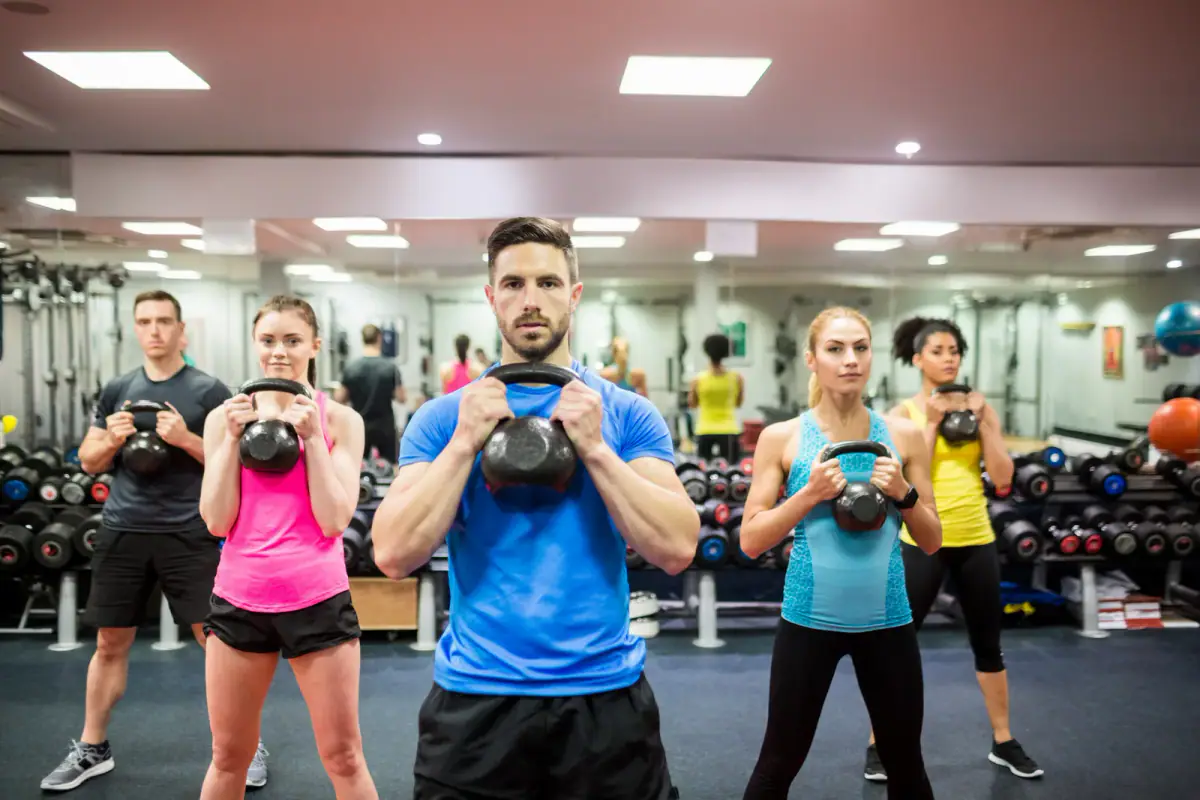
For small group conditioning, buy or carry duplicate stations, one working item per person at each station, so a circuit of four people needs about four kettlebells, four sets of bands and a couple of slam balls to run without waiting. The arithmetic is simple, and it is what separates a class that flows from one where people stand and watch. Group size is capped by the room, so do the math for the room you actually book.
Station math for four people
A circuit moves people around stations at a set interval. If there are four people and four stations, each station needs gear for one person. If two people share a station, it needs a pair of items or one item that two can alternate.
| Station | Item | Quantity for 4 people |
|---|---|---|
| Swings or goblet squats | Kettlebells | 4, with two sizes if you can |
| Pulls and presses | Resistance bands | 4 |
| Slams or throws | Slam balls | 2 (alternate in pairs) |
| Cable pull or push | Cable system in the room | 1 (alternate) |
| Cardio finisher | Rowers or a curved treadmill | 1 or 2, by booking a cardio space |
Count the items you can carry in one trip, not the items you own.
Pick items that earn their place
- Kettlebells. One moderate weight serves many people; two weights serve more. They fit one bag with a careful hand.
- Resistance bands. The lightest to carry and the most adaptable, so duplicate them freely.
- Slam balls. Heavy to carry, so take two, and check the floor surface and the ceiling with the host before you slam anything.
- The room’s own gear. A custom lifting rack, a cable system and dumbbells are in each space, so they can be stations and need not be carried.
The ideal circuit leans on the room for the heavy work and on your bag for the quick, portable tools. Bringing your own equipment covers what to ask about carrying it in and out.
The group limit comes first
A Standard hosts 1 to 2 guests and a Plus hosts up to 4. A circuit of four fits a Plus, and a group of six is two rooms or two waves, not a bigger circuit. The small group class page explains how the limit and the per-head billing work, and small group pricing per person helps you set a rate.
Timing a circuit
Run work and rest intervals you can keep: 40 seconds on and 20 off is a common starting point, but there is no universal right answer. Allow ten seconds to move between stations. Write the stations on a card so you can run the clock and coach at the same time. Test one round with a friend on your free first hour.
Cost
Room hours start at $18, and each coach sets their own terms for their classes. You keep 100% of what you charge, and a first hour for fitness professionals is free via get-started. If your finisher needs the cardio space, rowers and a curved treadmill are available in the cardio spaces from $12.
A shopping order that avoids waste
Buy in this order: bands first, since they are cheap and light; kettlebells second, in one or two weights; slam balls last, because they are heavy and floor dependent. After four sessions, count which items your group fought over and add a duplicate of that one. Evidence from your own class beats any list, including this one.
Related questions
How many of each item does a group of four need?
Enough that nobody waits. For a circuit with one station per person, that is four of the main item, or two pairs if you rotate in pairs. Fewer stations mean waiting.
Do I carry kettlebells and slam balls in myself?
You can, and many coaches do. Ask the host about storage and carrying in, and count the weight of what you can carry in a single trip before you plan a circuit.
Can I run six people in one room?
Check the limit first. A Plus space hosts up to 4 guests, so six means two rooms or two waves rather than more stations in one room.