
Equipment List for Senior Fitness Sessions in a Rented Room
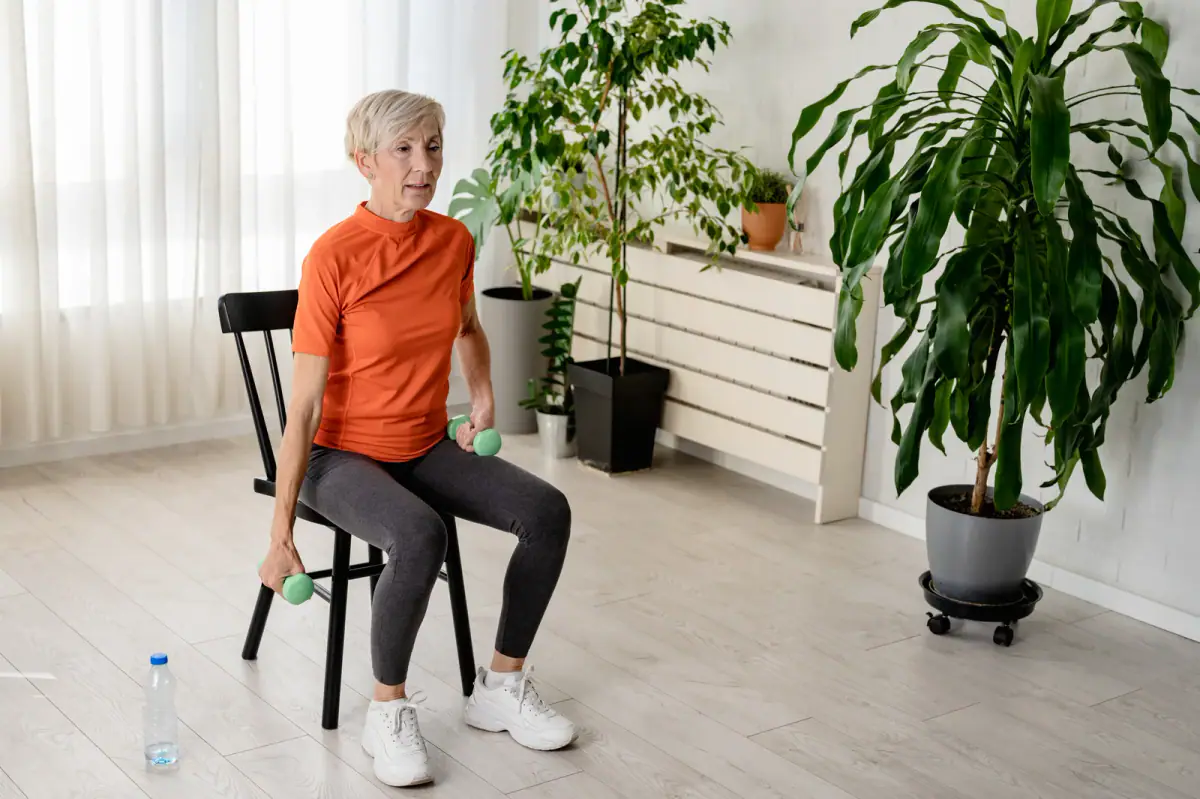
For senior fitness sessions in a rented room, plan for sturdy armless chairs at two heights, light dumbbells with small steps, bands, something stable to hold for balance work, and clear floor, and have clients with health conditions cleared by their physician first. This list is plain exercise coaching equipment and says nothing about treating any condition. Use it to decide what to bring and what to confirm in the room.
The kit, in the order you will reach for it
- Sturdy chairs without wheels. Two seat heights, ideally armless for sit to stand drills and with arms for clients who need a push. Check they do not slide on the floor.
- Light dumbbells. The smallest sizes the room holds, plus your own lighter pairs if needed. Progress in small steps.
- Resistance bands. Light and medium, for rows, presses and seated leg work.
- A stable support. A wall, a rack upright or a heavy bench to rest a hand on during balance drills. Test it for steadiness.
- A small step or low box. For step ups, only if the client is ready and you are standing by.
- A large foam pad for floor work. Optional, and only for clients who get down and up safely.
The room’s custom lifting rack, cable system and dumbbells give you more options, but a seated cable row at a light stack suits many clients and keeps the work upright and supported. Confirm each item in the room before you plan around it.
What to measure when you tour
| Item | What to check | Why |
|---|---|---|
| Chair height | Knees at or below hip level | Makes standing up easier |
| Floor | Flat, dry, free of cables | Reduces trip risk |
| Space between items | Room to walk with a cane or walker | Keeps routes clear |
| Smallest dumbbell | A weight your lightest client can handle | Lets you start safe |
| Lighting | Even and bright enough to read | Helps you and the client see |
| Route in | Short and step free | Saves energy for the session |
Each space has controllable lighting, so brighten it for older eyes. Read what private gym options suit older adults for the wider picture.
Safety and scope
Older clients often have a physician’s guidance, and your job is to work inside it. Ask clients about conditions and medications, request clearance where it is relevant, and stop a session at any sign of pain, dizziness or chest discomfort. Tell the client to contact their clinician. Do not diagnose or promise outcomes. Chair based sessions are a good low-risk starting format, and you can build up from there.
Pricing and booking
Older clients often prefer mid morning or early afternoon slots, so check the weekday hours, which run 5 AM to 9 PM, and book a slot with easy parking. Rooms start at $18 an hour, and you set your own price. For a rate framework, see how to charge for senior personal training. A first hour for fitness professionals is free through get-started, enough time to run one test session with a friend of the right age and see what is missing from your kit.
Related questions
What seat height works for older clients?
A seat where the knees sit at or slightly below hip level lets most people stand without a struggle. Check it with your own clients, since leg length varies, and keep one higher and one lower option on hand.
How light is light enough for dumbbells?
Light enough that the client keeps good form for every rep, with small increments to progress. Check that the room's smallest dumbbells suit your most cautious client, or bring your own lighter ones.
Do I need medical clearance for these sessions?
Ask clients with any health condition to get a physician's clearance before you begin, and keep your role to coaching exercise. A clinician answers medical questions, not a trainer.