
Ceiling Height for a Training Room: Lifts, Throws and Jumps
The ceiling height a training room needs is set by the tallest client doing the highest movement plus clearance above it, measured to the lowest fixture and not to the ceiling surface. A room that suits squats can fail for overhead pressing, box jumps, or medicine ball throws. Check height before you check rent, and test it when you tour or book a private room.
Measure to the lowest thing overhead
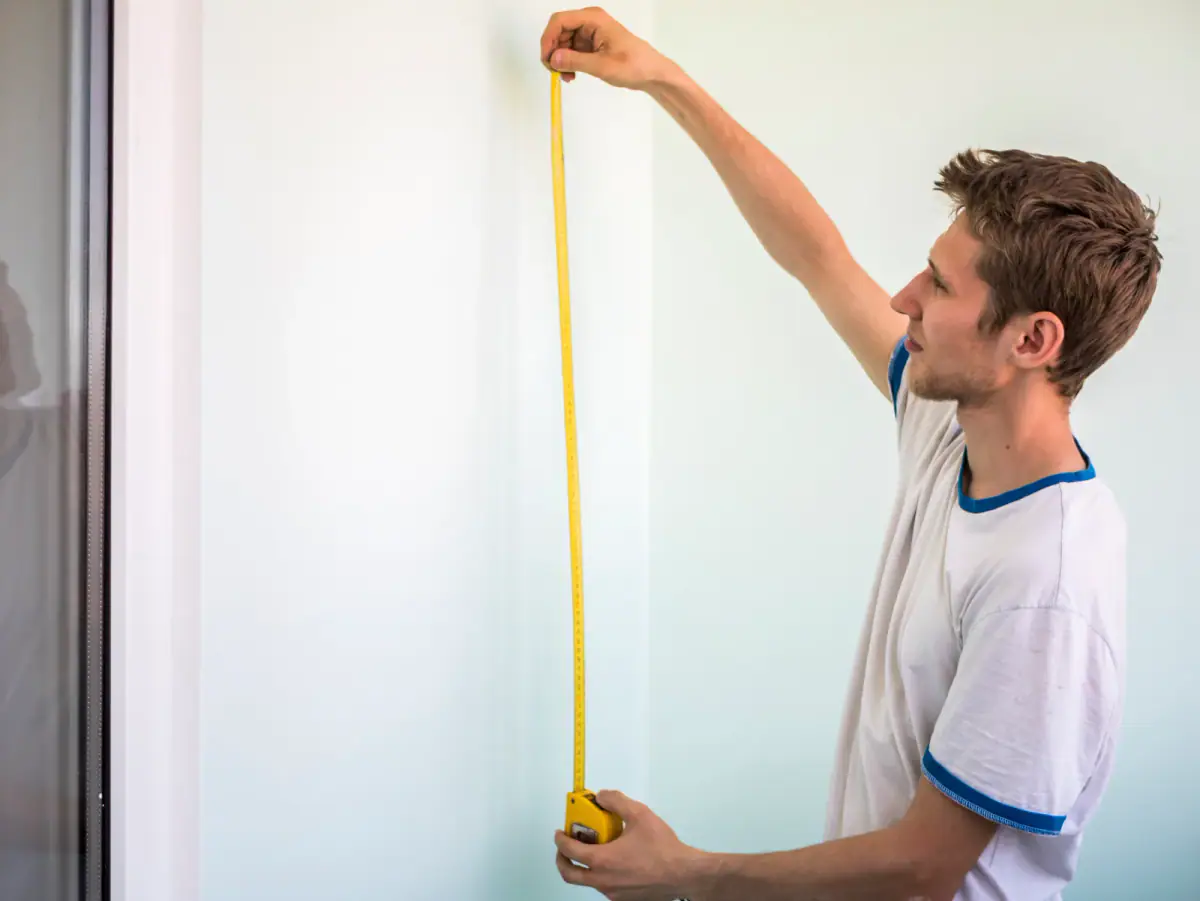
Ceiling height on a listing usually means the bare ceiling. Your usable height is smaller. Walk the room and find the lowest object above where you will train: a light fixture, a sprinkler head, a duct, a beam, a sign, or a mounted screen. Measure from the floor to that object, in the spot where the movement happens.
Then check the whole lifting zone, not one point, because height can change across the room. A ceiling that rises in the middle may drop near a wall, which is exactly where racks tend to sit.
A way to calculate the requirement
You do not need a code table. Build the number from the movement.
- Find the tallest client. Height matters because reach rises with it.
- Find the highest point of the movement. For an overhead press, it is the bar at lockout. For a jump, it is the head or hands at the peak. For a throw, it is the top of the arc.
- Add clearance. Leave a margin above that point so a missed rep, a bounce, or a fixture is not hit.
- Compare with the lowest fixture. If the fixture is below the total, the movement is out for that client.
Illustrative example, rounded and not a standard: a client of about six feet pressing a barbell to lockout holds the bar at roughly seven and a half to eight feet. With a margin, you want the lowest fixture clearly above that. Measure your own client with an actual bar instead of trusting an estimate.
What each movement asks of the room
| Movement | Height question | Practical test |
|---|---|---|
| Overhead press and jerk | Bar at lockout plus a margin | Have the tallest client press an empty bar |
| Box jumps and vertical jumps | Peak of the jump plus a margin | Mark the peak with a hand reach, then add jump height |
| Medicine ball throws up a wall | Arc height | Test with a light ball first |
| Pull-ups and hanging work | Rig height plus the client’s reach | Check that feet clear the floor and head clears the fixture |
| Ordinary squats, rows, presses on a bench | Rarely limiting | Check only for very tall clients |
Throws and jumps ask the most, because the body or the ball goes beyond the static reach. If your sessions include them, test before you commit.
Floor area and height go together
Tall ceilings help only if the floor around them is usable. A room can have height but too little open area for a throw or jump landing. The area side is explained in how many square feet a training room needs. Use both when you walk a space, along with the broader list in what to look for when touring a training space.
The trade-off of very high ceilings
High space helps tall movements and costs more to condition. Large open rooms take longer to warm in January and cool in July, and they can be loud, because sound travels. If your sessions do not use the height, a standard ceiling is fine and may feel more comfortable.
Height also carries lease cost in a leased building. Weigh it against how often you actually use it, which is a volume question as discussed in hourly versus monthly rental.
Booking a room instead of guessing
Rented time lets you test clearance with real clients before you buy anything. At FlexWerk Carmel the hourly rate runs $18 to $22 (cardio rooms start at $12), and a fitness professional’s first booked hour costs nothing. Rooms come with a rack, cable system, and dumbbells, and there is no lease. Bring your tallest client and your highest movement for the first booked hour, and read the result with a tape measure rather than a listing.
If a room fails the test, you have lost one hour instead of a year, and you can use the same method on the next space. Make a short list of the movements that matter, test each, and write the measurements in your notes for every room you consider.
Related questions
How do I measure usable ceiling height?
Measure from the floor to the lowest thing overhead, which may be a light, sprinkler, duct, beam, or sign rather than the ceiling itself. That lowest point is the clearance you can actually use.
Does ceiling height matter for ordinary strength sessions?
Yes for overhead pressing, jerks, jumps, and throws. A room that works for squats and rows can fail the moment a tall client presses a barbell overhead.
Is a higher ceiling always better?
Not always. Very tall space can be harder and costlier to heat and cool, and the extra height only helps if your programming uses it.